A Promise on Paper: How Did Humanity Put Trust into Circulation?
BEYOND THE GATES
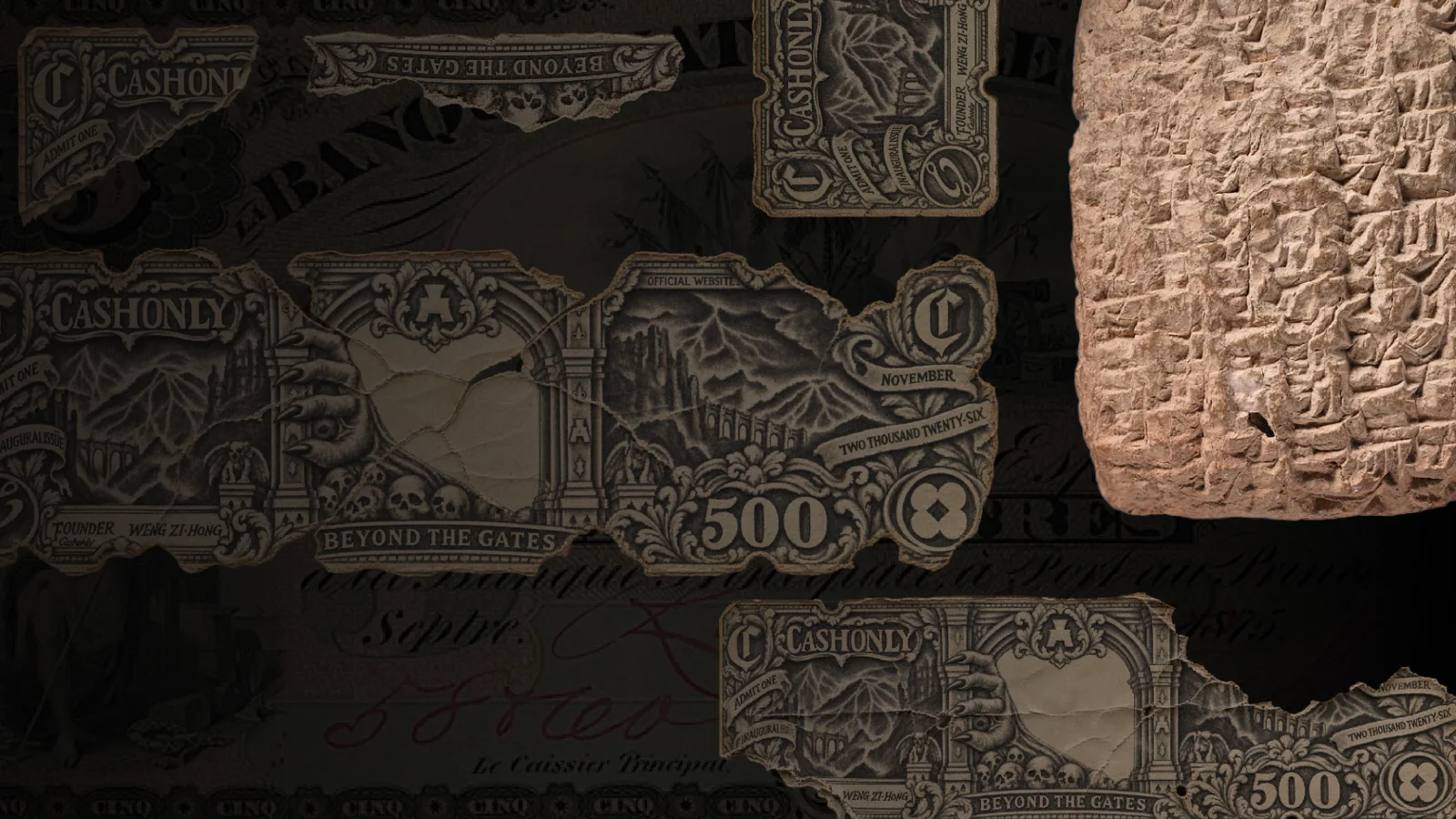
Tickets, notes, and certificates give tangible form to value, trust, and promises.
A delivery, a payment for work, a promise to be fulfilled at a later date—all can be recorded through words and marks on an object that can be carried, identified, and preserved.
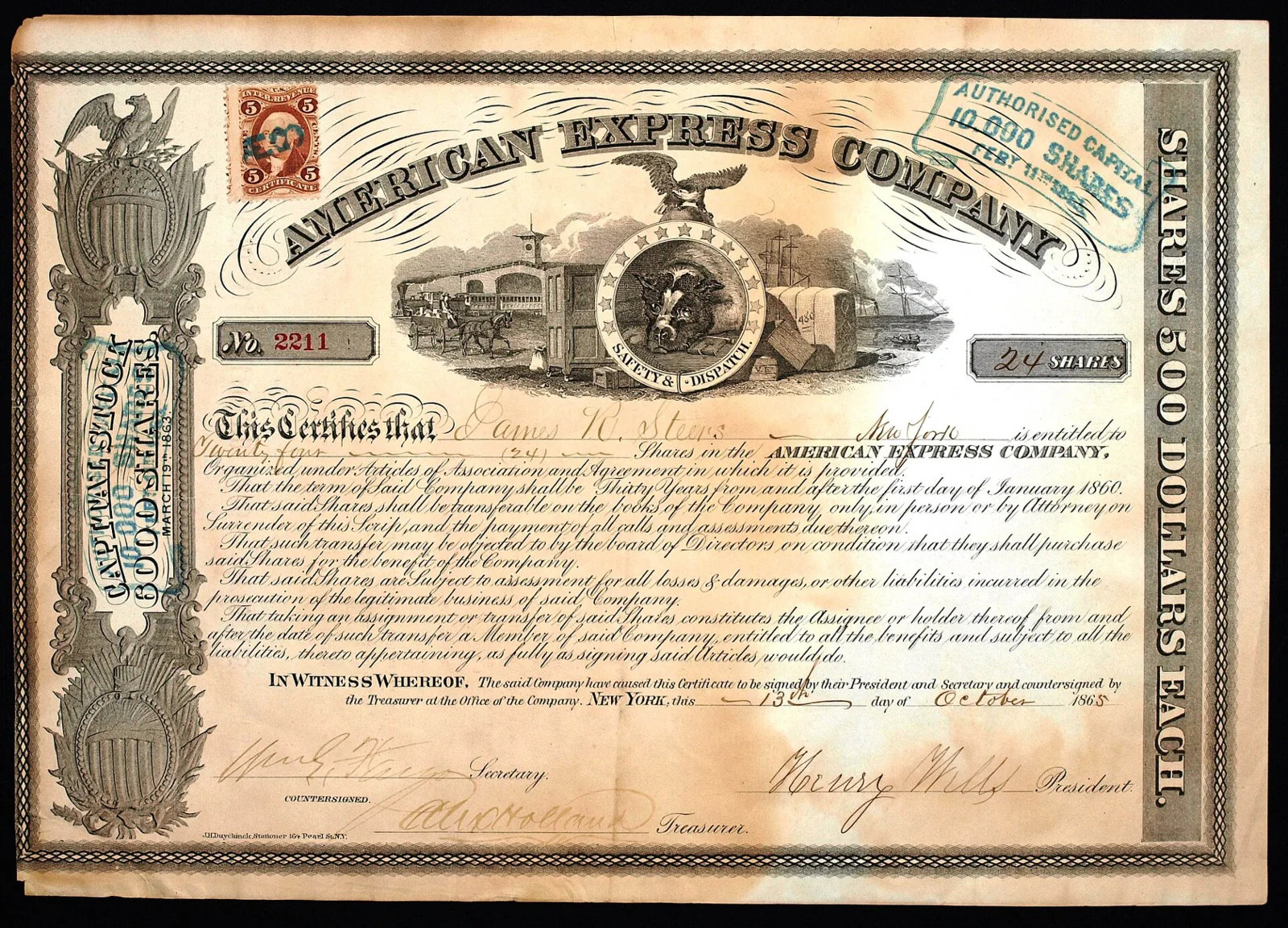
As transactions moved beyond face-to-face exchange and spoken recollection, people began to leave evidence of promises yet to be fulfilled, allowing value to travel across time and distance.
American Express Company, share certificate, 1865. EDHAC member collection; scan by EDHAC e.V., via Wikimedia Commons. Public domain.
-
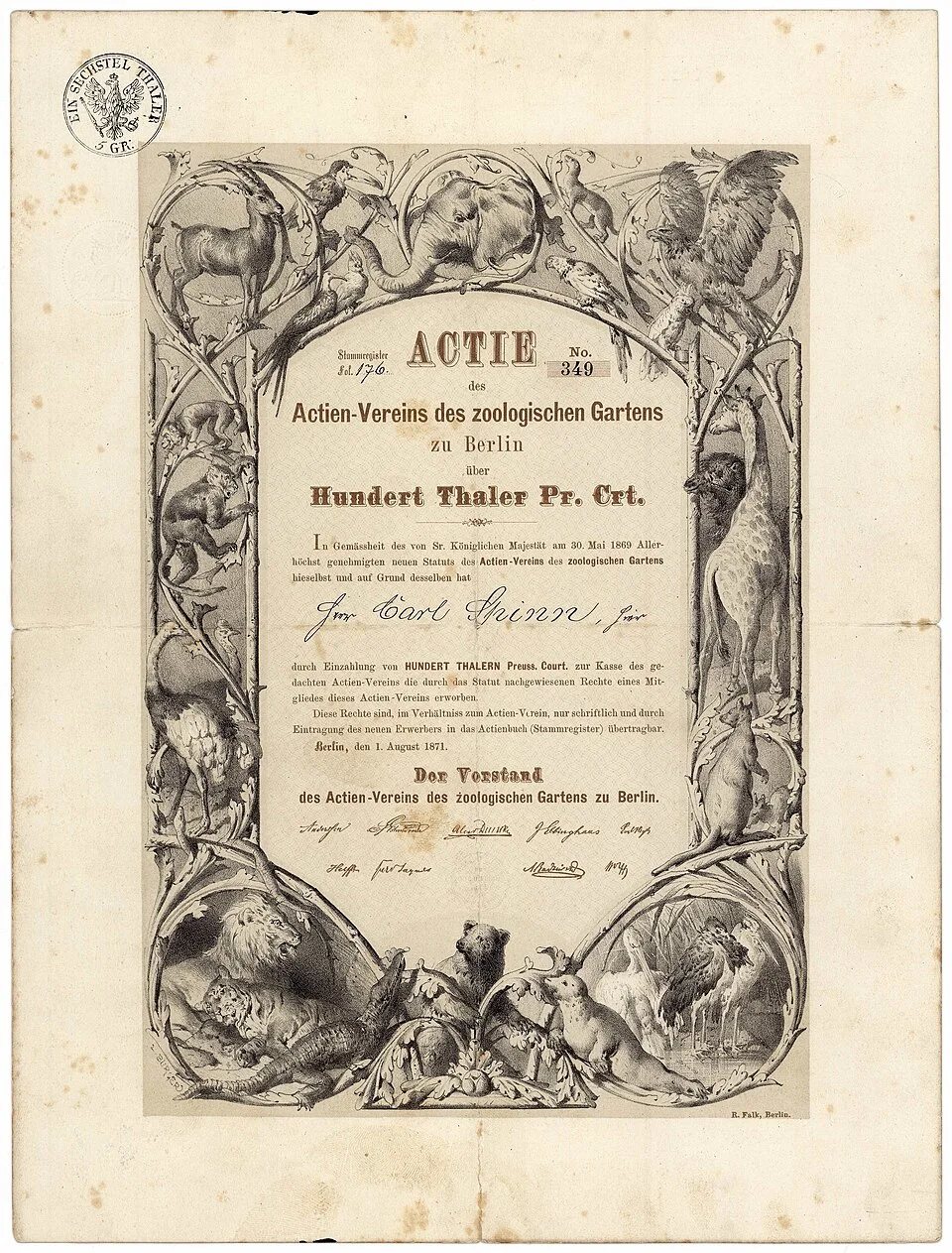
Today, we are familiar with the denominations, signatures, seals, and serial numbers on banknotes, just as we are accustomed to presenting a ticket to enter a venue. Yet these seemingly self-evident conventions emerged from generations of practice in exchange, circulation, trust, and identification.
Actien-Verein des zoologischen Gartens zu Berlin, share certificate, 1871. EDHAC member collection; scan by EDHAC e.V., via Wikimedia Commons. Public domain.
-
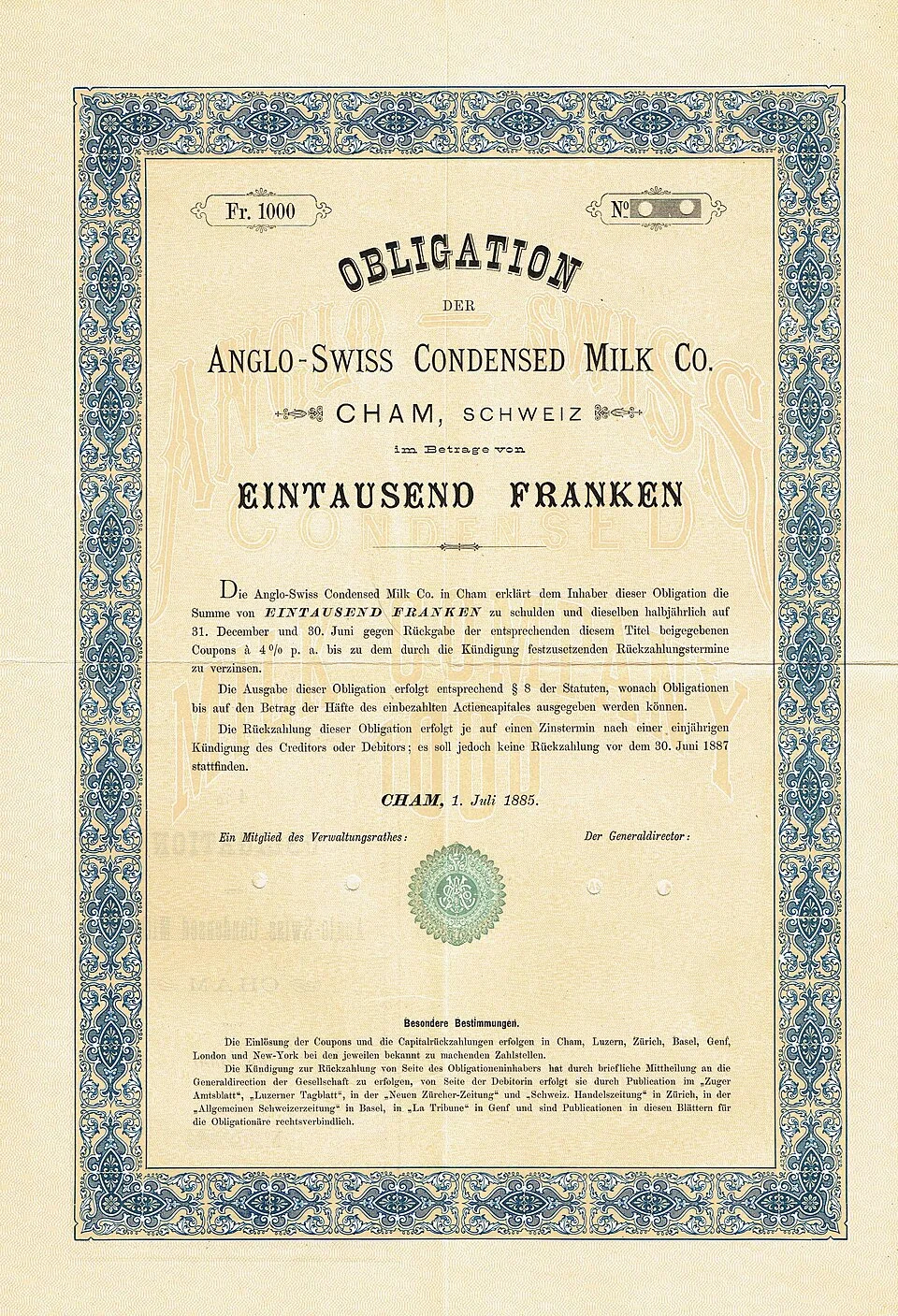
This history follows no straight path from precious metals to paper money. Receipts, remittance documents, banknotes, and admission tickets each serve different purposes.
-
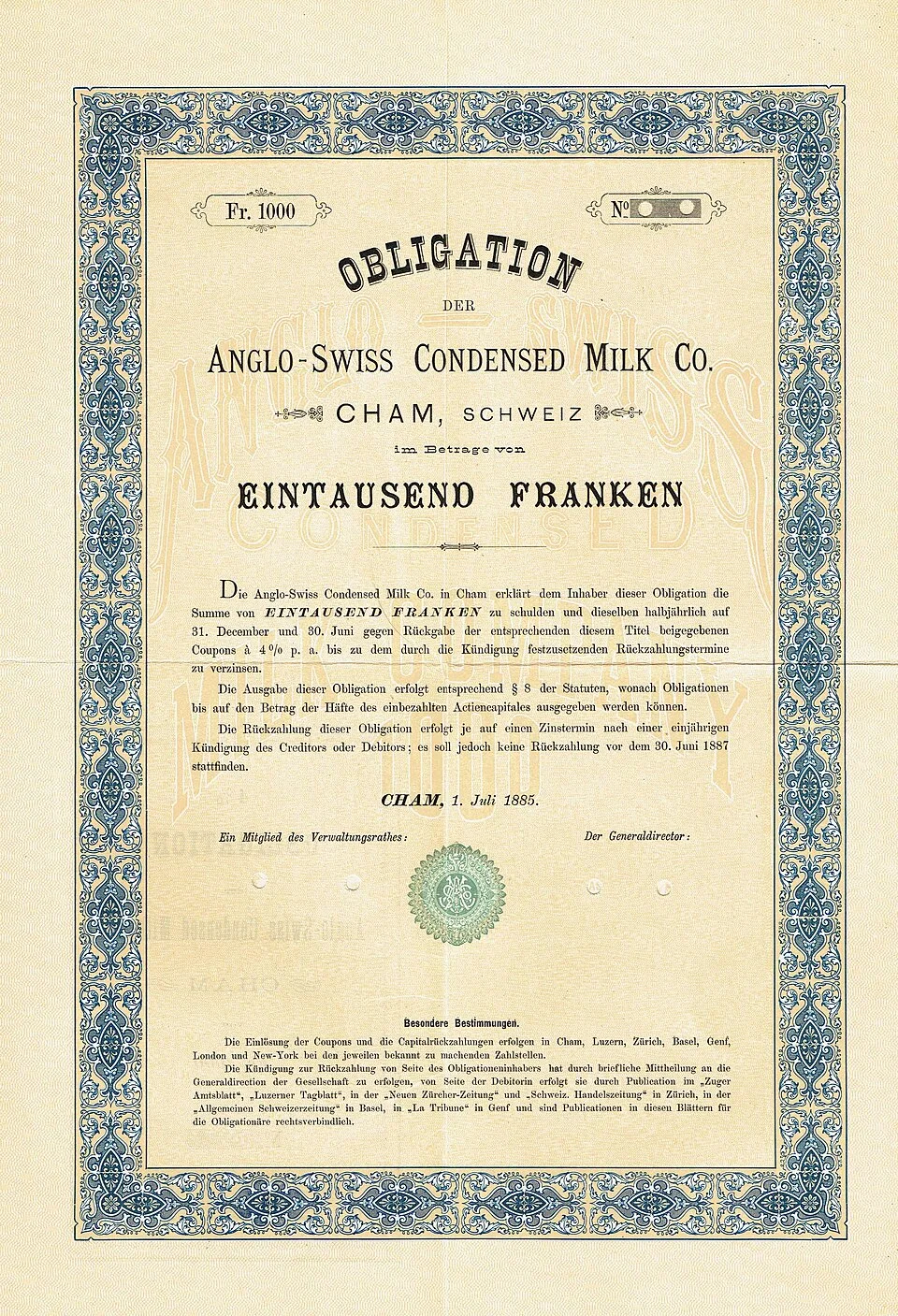
Viewed together, however, they reveal a recurring question: how do people give an object meaning that extends beyond the material from which it is made?
Anglo-Swiss Condensed Milk Co., bond, 1885. EDHAC member collection; scan by EDHAC e.V., via Wikimedia Commons. Public domain.
-
01
Before Paper: Recording What Changed Hands
Long before paper money appeared, people used clay and plant fibers to preserve records of goods received and delivered.
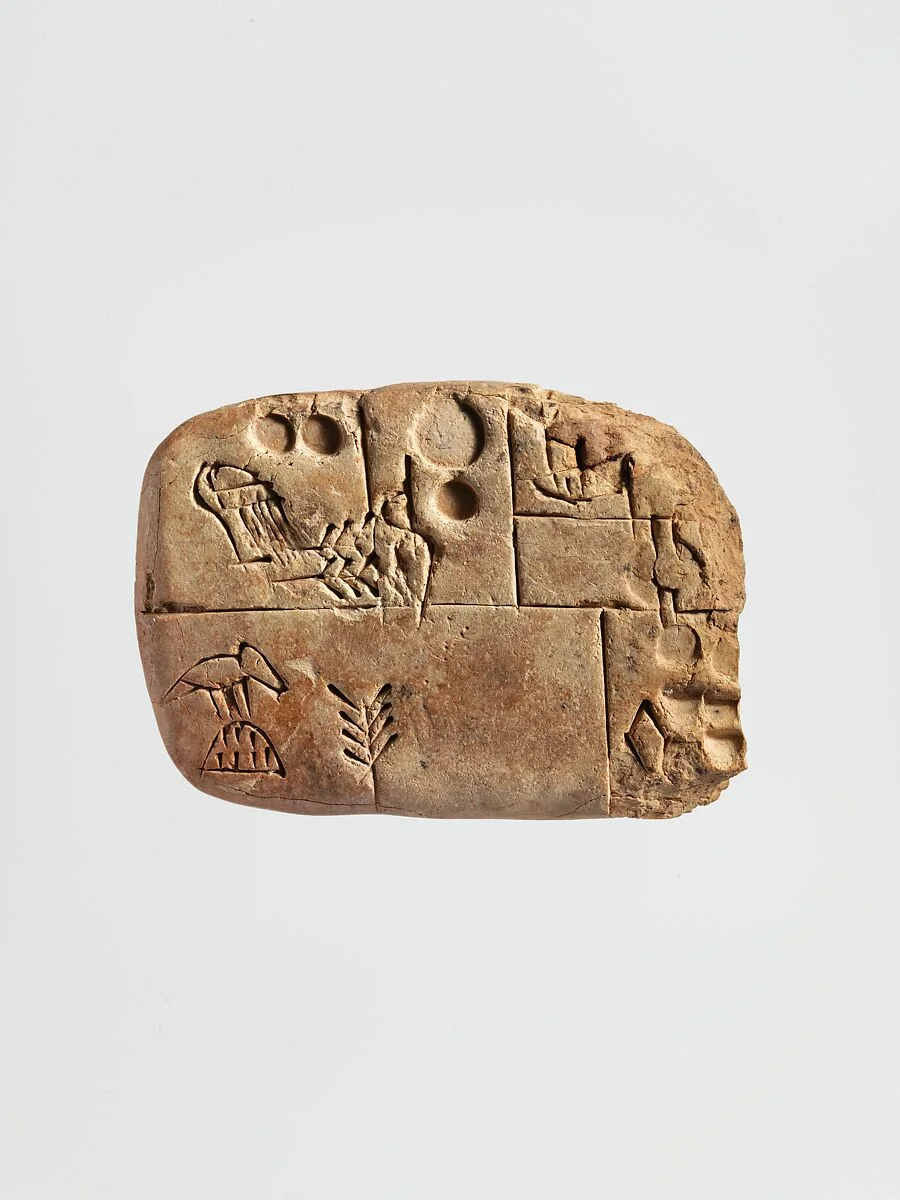
A Sumerian clay tablet in the collection of The Metropolitan Museum of Art in New York, dating to approximately 3100–2900 BCE, contains an administrative account concerning the distribution of barley and emmer wheat.
Source: The Metropolitan Museum of Art, 1988.433.2
-
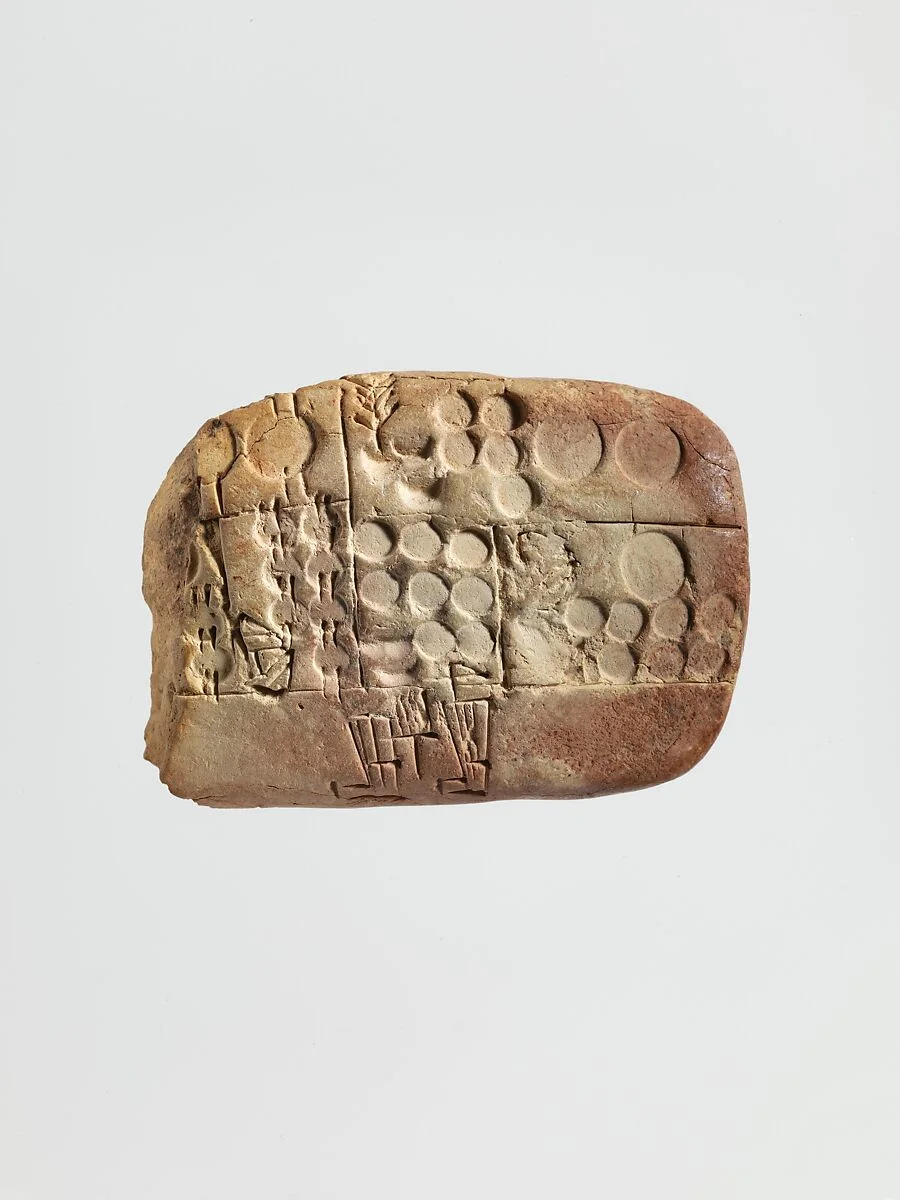
Writing was still in an early stage of development, so researchers must interpret the tablet through its signs, quantities, and their arrangement. The museum also notes that, in the absence of explicit verbs, it remains difficult to determine whether the account records deliveries or distributions.
Source: The Metropolitan Museum of Art, accession no. 1988.433.2
Rights: Public domain. CC0, The Met Open Access.
-
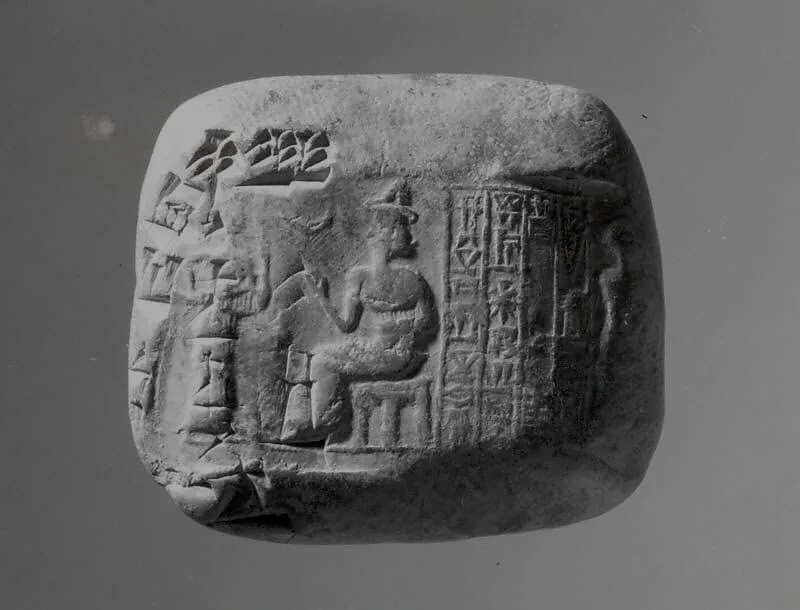
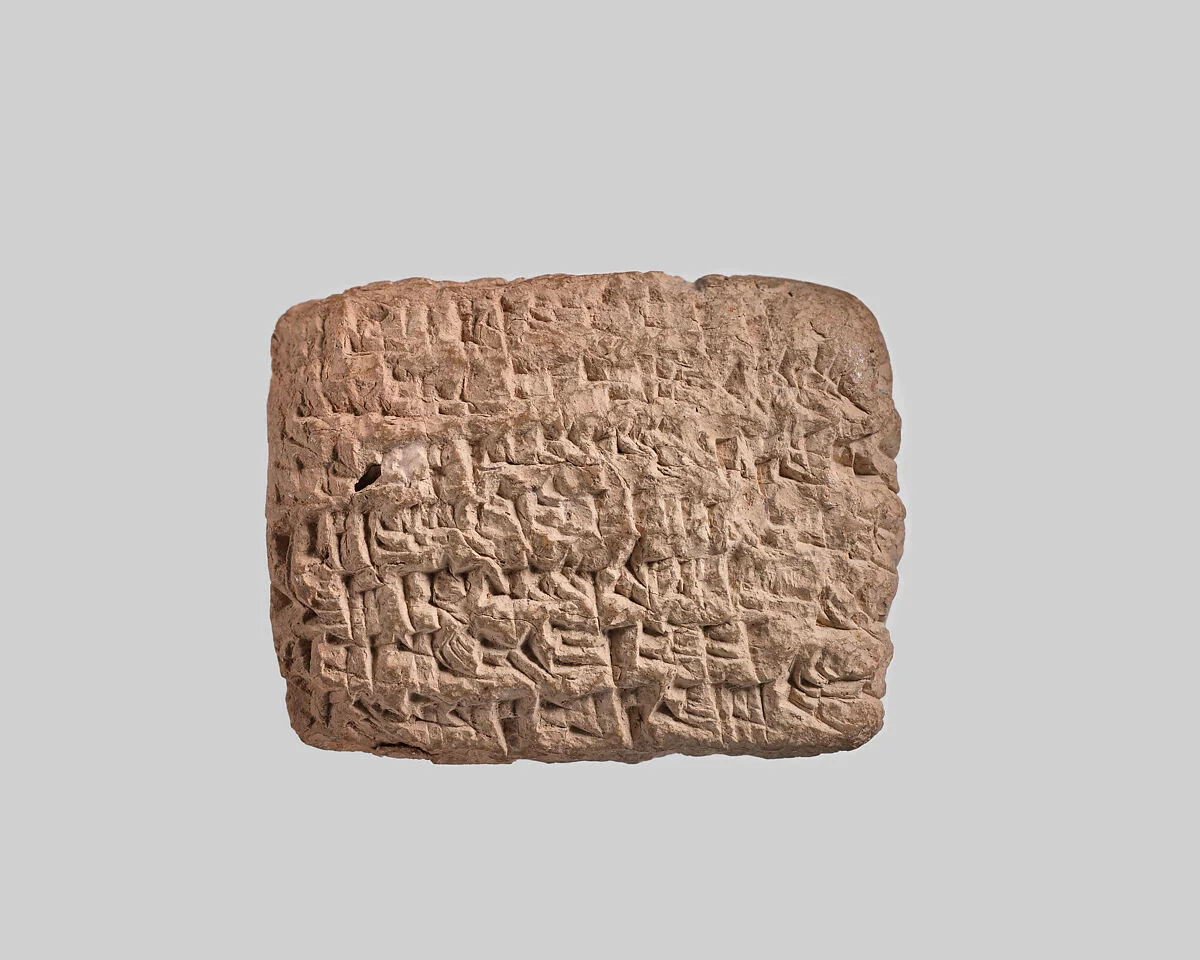
Another tablet, dating to approximately 2040 BCE, is more specific: it is a receipt for the delivery of goats.
Source: The Metropolitan Museum of Art, accession no. 57.16.3
Rights: Public domain. CC0, The Met Open Access.
-
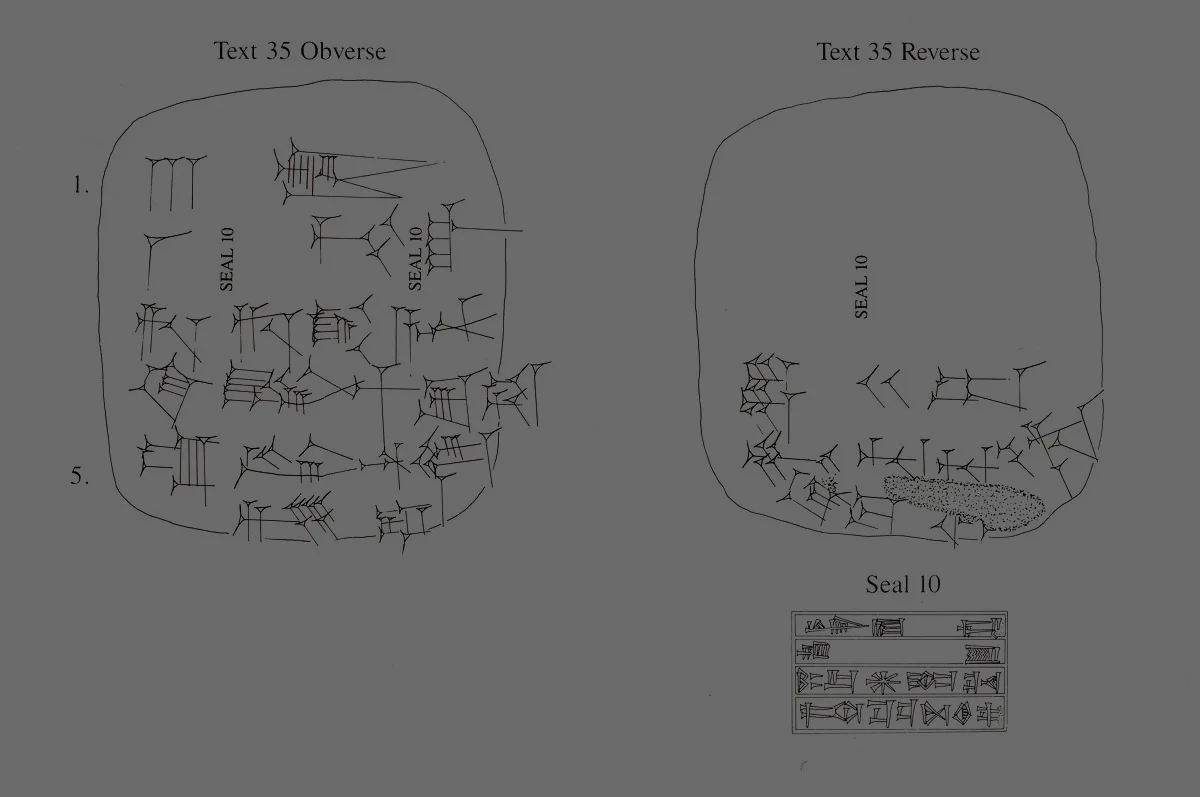
From Umma in Mesopotamia, this object measures only about four centimeters across. Alongside its cuneiform inscription, its surface bears the impression of a cylinder seal. A delivery of livestock was thus preserved in a piece of clay small enough to rest in the palm of a hand.
Source: The Metropolitan Museum of Art, accession no. 57.16.3
Rights: Public domain. CC0, The Met Open Access.
-
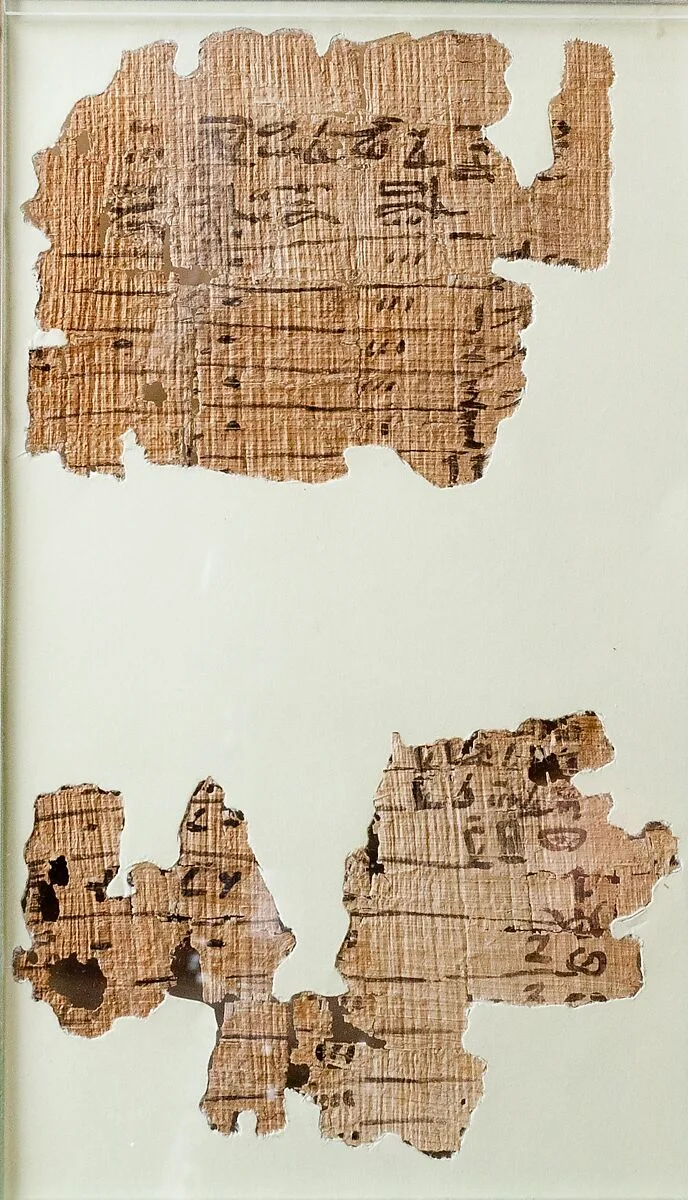
Elsewhere, ancient Egyptians kept accounts on papyrus. A record of workers’ wages in The Metropolitan Museum of Art, dating to approximately 1961–1917 BCE, documents payments made in grain and dates. Listed by day, the payments extend from the end of one year into the next, leaving a readable trace of work and life four thousand years ago.
Source: The Metropolitan Museum of Art, accession no. 22.3.527
Rights: Public domain. CC0, The Met Open Access.
_
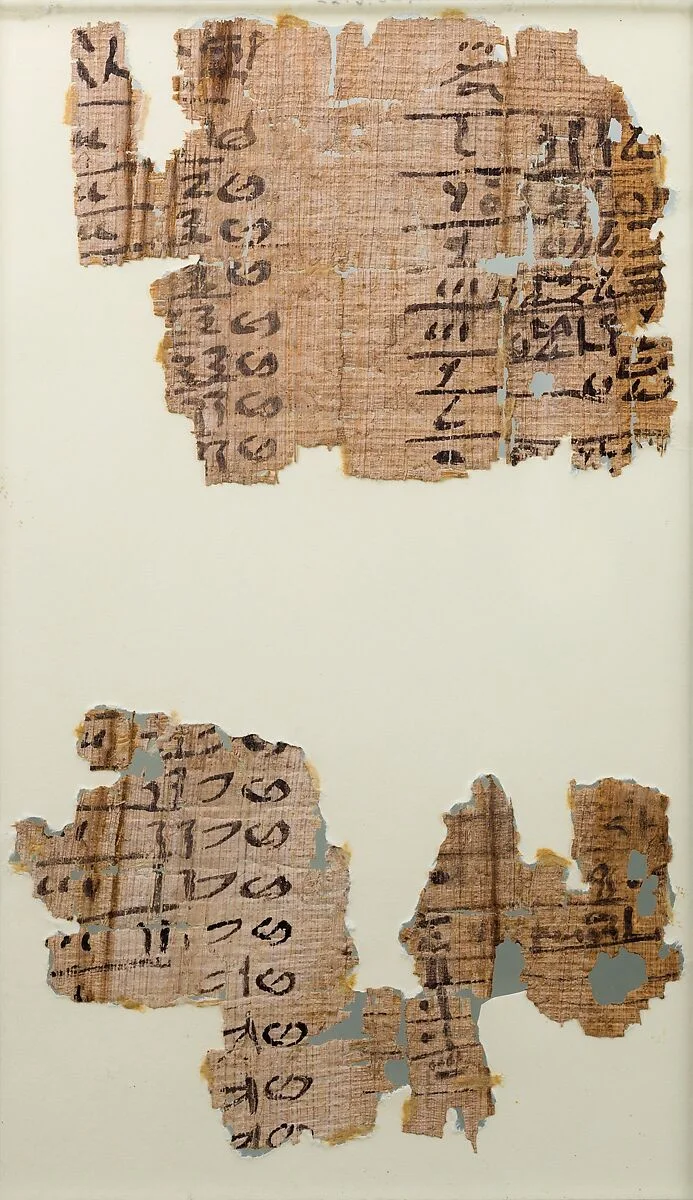
The goats recorded on clay, and the grain and dates recorded on papyrus, were not yet represented by transferable instruments of payment. These objects were, first and foremost, records: they confirmed that something had taken place, ensuring that a delivery existed beyond the memories of those involved.
Yet these small objects already reveal the importance of documentary evidence. The goods could leave the scene, and the parties could go their separate ways, while the writing remained to bear witness to the exchange.
Source: The Metropolitan Museum of Art, 22.3.527
-
02
Value Travels: Flying Cash, Jiaozi, and Bills of Exchange
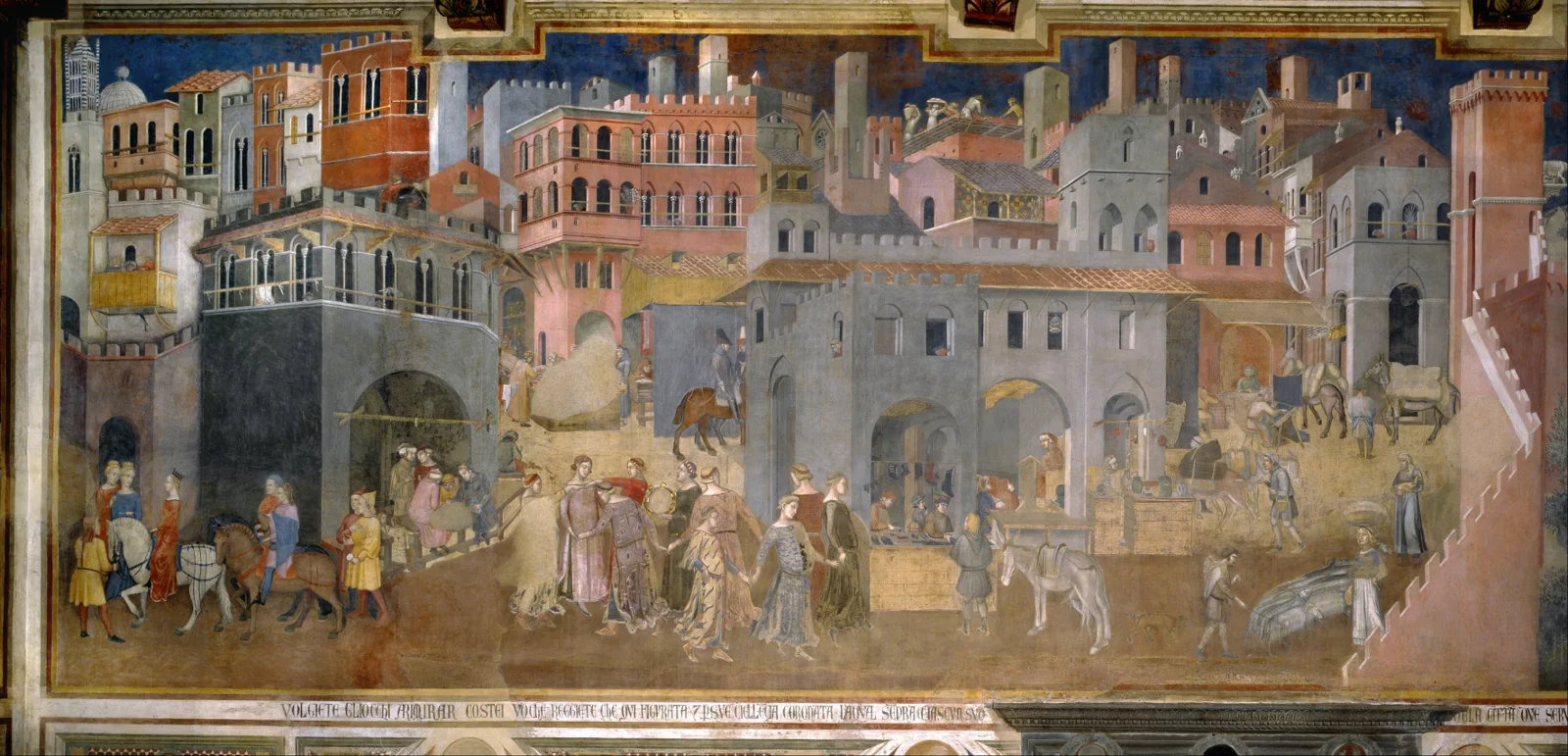
As transportation developed and trade extended across towns and regions, the problem changed. People needed not only to keep records, but also to move their wealth safely over long distances.
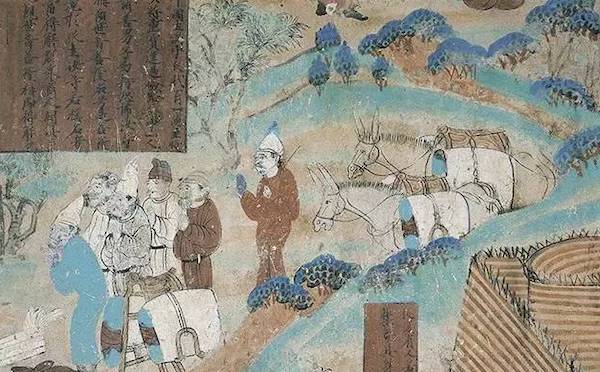
In the early ninth century, during China’s Tang dynasty, a form of remittance known as feiqian, or “flying cash,” emerged. Merchants deposited money with designated institutions or operators, received a document, and then presented it for verification and withdrawal elsewhere.
-
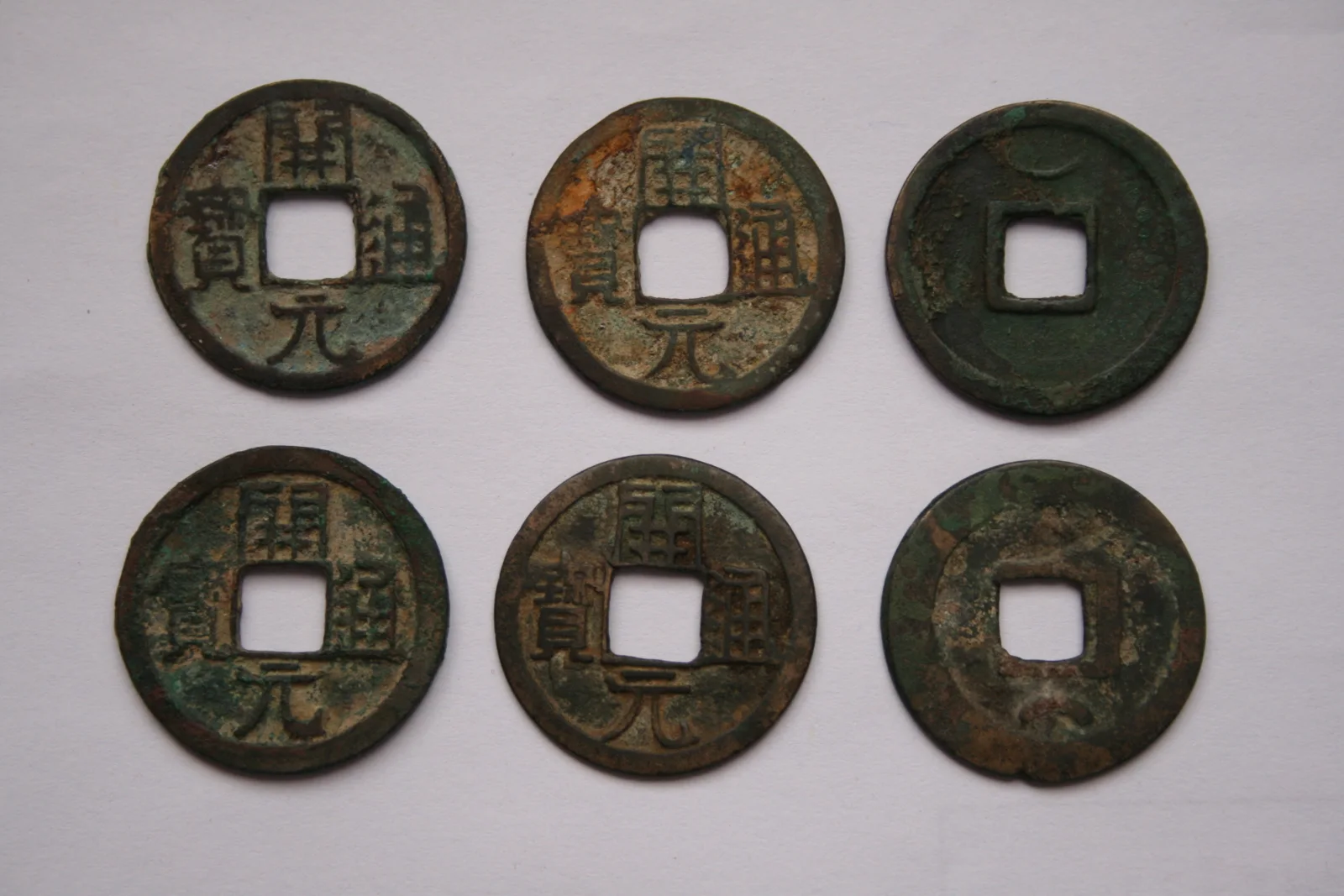
Records of this practice date to the Yuanhe era of Emperor Xianzong’s reign, from 806 to 820 CE. For traveling merchants, it removed the need to carry heavy copper coins and reduced the risks and burdens of transporting wealth. Flying cash was primarily a means of withdrawing funds in another location; it was not yet equivalent to paper money circulating in everyday trade.
Source: Gary Lee Todd, 100 Tang Kaiyuan Coins, Wikimedia Commons. Rights: CC0 1.0 Universal. Source & rights
-
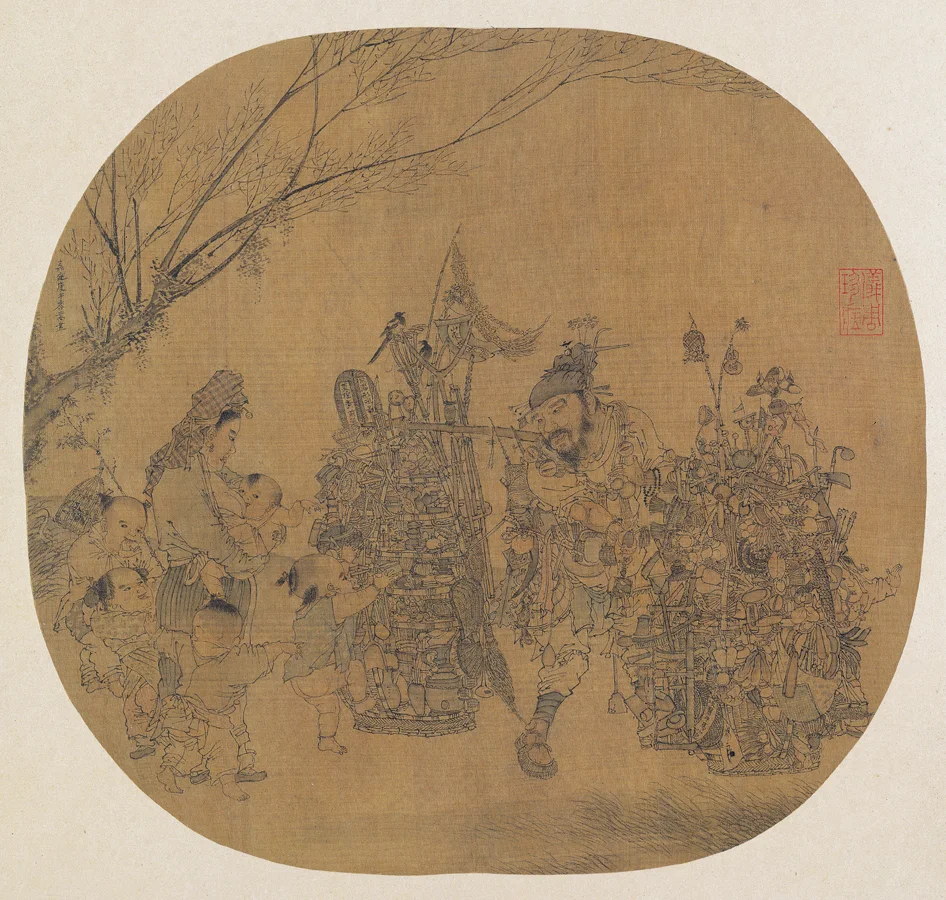
During the Song dynasty, trading conditions in Sichuan created a different need. The iron coins used locally were cumbersome, making large transactions particularly inconvenient. This created an opening for merchants to develop deposit services and issue paper receipts. Known as jiaozi, these paper instruments gradually came to be transferred as a means of payment.
Source: Li Song, The Knick-knack Peddler, National Palace Museum; reproduction from The Yorck Project, via Wikimedia Commons. Rights: Public domain. Source & rights
-
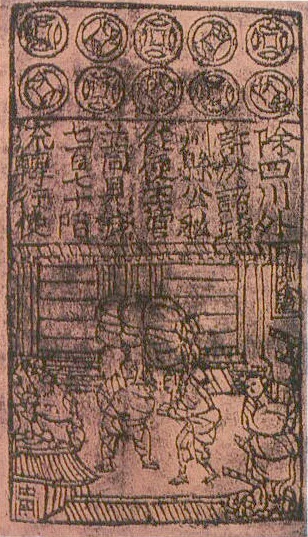
Flying cash and jiaozi addressed different problems: the former focused on transferring funds between locations, while the latter brought paper instruments into payment itself. Together, they show how people sought new ways to carry value when commerce exceeded the practical limits of metal currency.
Source: Jiao zi, scanned from 《社会历史博物馆》, ISBN 7-5347-1397-8, via Wikimedia Commons. Rights: Listed as public domain / PD-Art on the source page. Source & rights
-
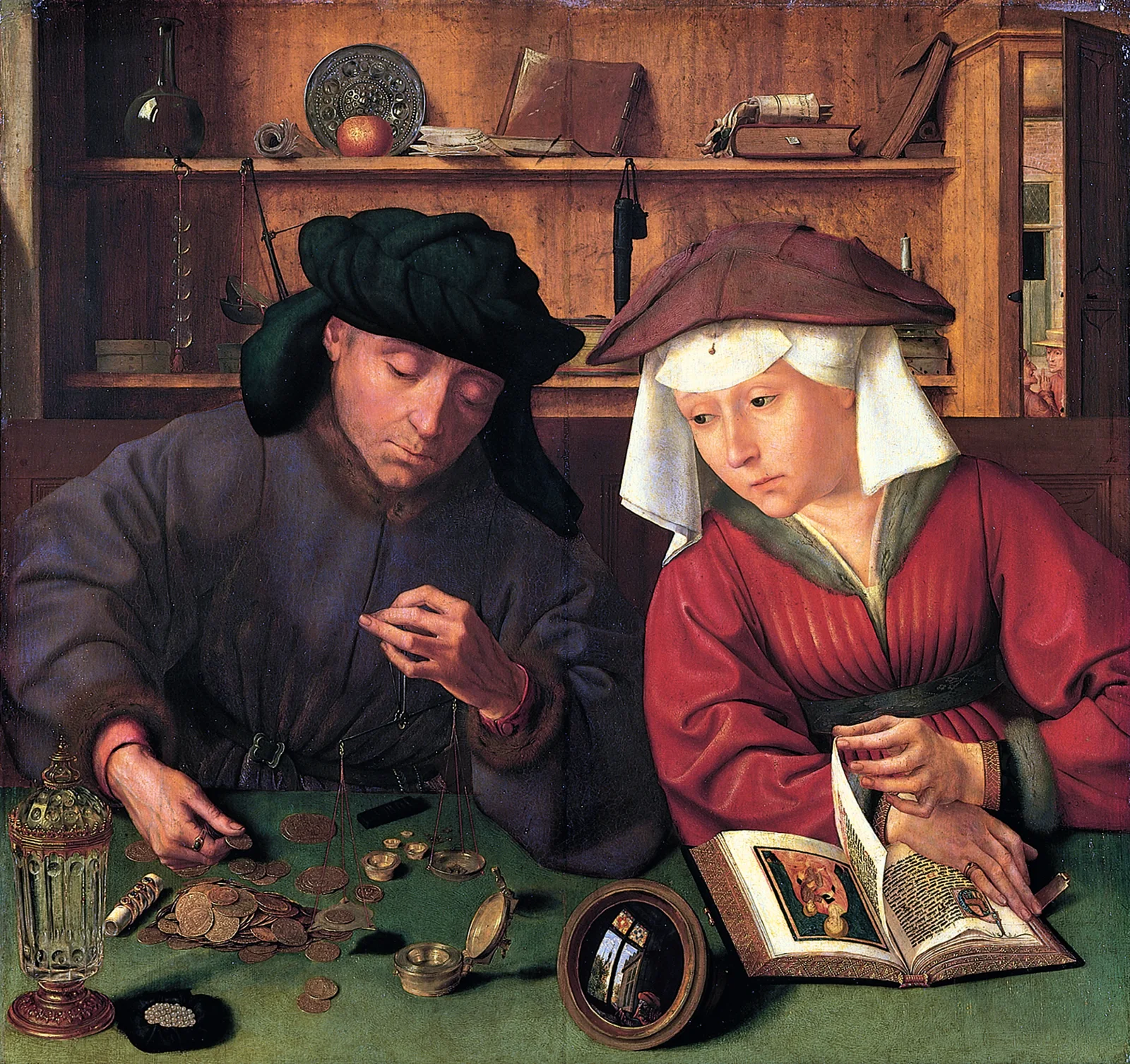
In medieval Europe, merchants and bankers likewise connected cities through bills of exchange. By the early fourteenth century, these instruments were widely used in commerce and finance between cities. A trader could pay money in one location and, through a written payment order, arrange for funds to be paid elsewhere in an agreed currency, addressing both currency exchange and credit.
Source: Quentin Massys, The Moneylender and His Wife, Louvre Museum; The Yorck Project, via Wikimedia Commons. Rights: Public domain. Source & rights
-
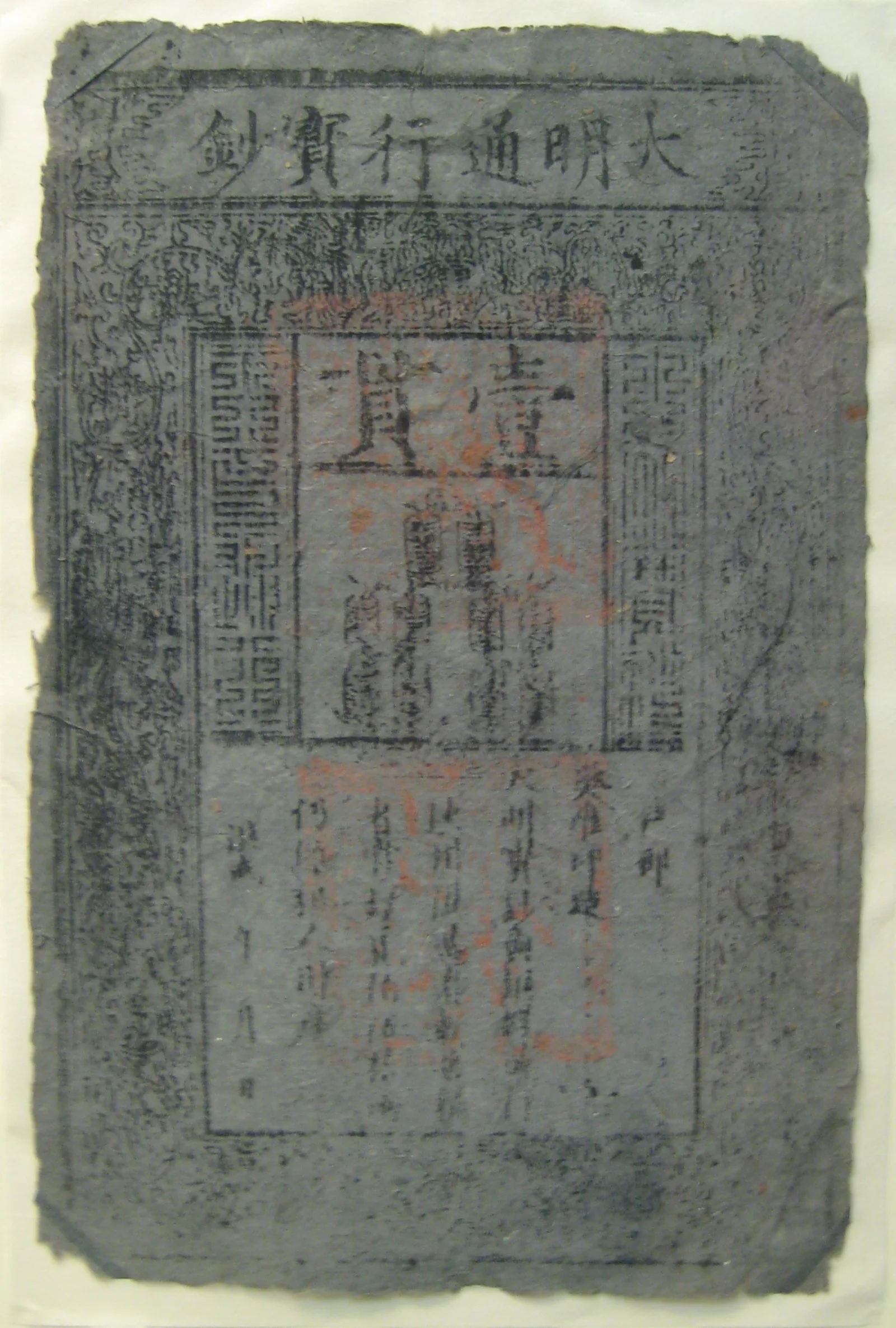
Different regions did not follow identical paths, yet each gradually allowed written documents to perform work that had once required the physical movement of goods or money.
Value began to travel through documents. Its movement depended not only on marks on paper, but also on trust in issuers, payers, and the rules governing exchange.
Source: BabelStone, British Museum Ming banknote, British Museum, no. 1942,0805.1, via Wikimedia Commons. Rights: CC0 1.0 Universal. Source & rights
_
03
How Paper Became Money:
Answers from Different Regions
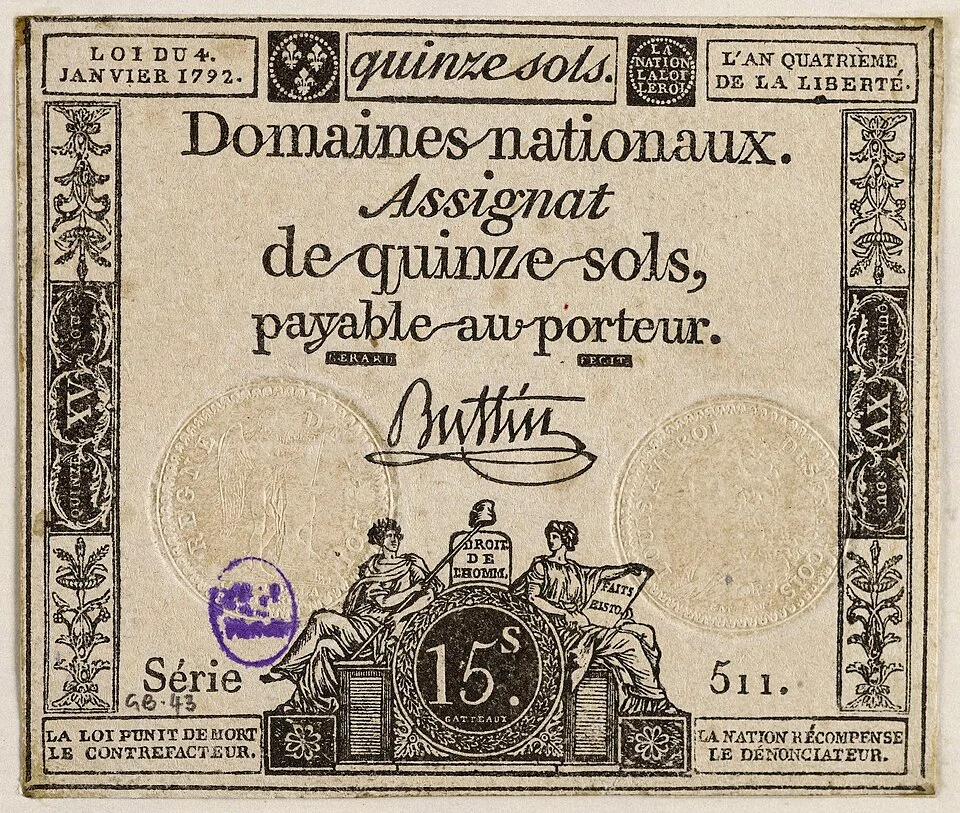
A piece of paper can be exchanged for goods because the person accepting it believes that the next person will also recognize its face value. That trust may rest on a promise, the credibility of the issuing institution, or the backing of a state’s institutions. When these promises and rules are collectively accepted, the numbers on the paper become a measure of exchange, allowing a thin sheet to carry value far beyond that of its material.
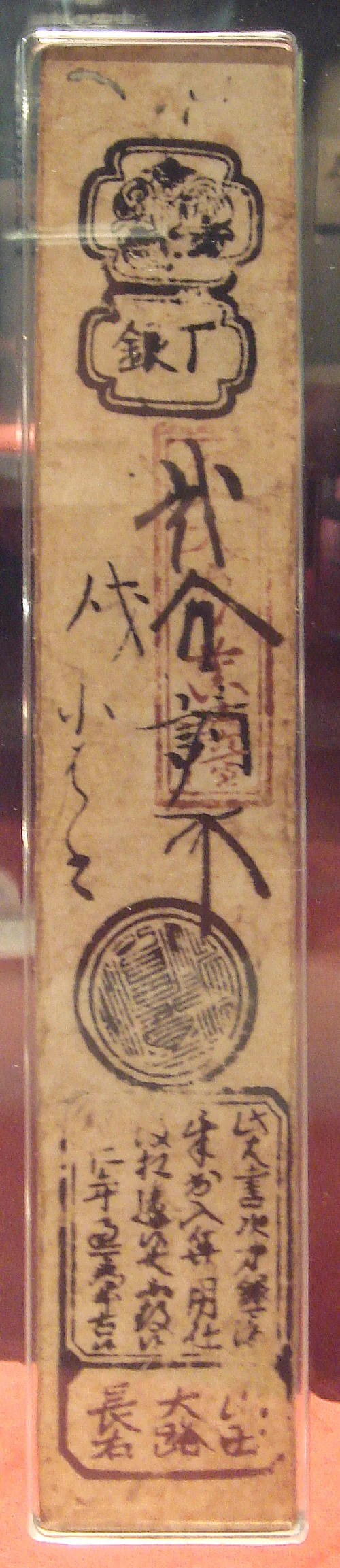
Around the beginning of the seventeenth century, Yamada hagaki appeared in the Yamada district of Ise, Japan. These local paper notes were associated with merchants’ silver deposits and redemption services, demonstrating how a community could establish the acceptance of paper instruments within a defined area.
Source: Currency Museum, Bank of Japan. Yamada hagaki. Photograph by PHGCOM, via Wikimedia Commons.
Rights: CC BY-SA 3.0.
-
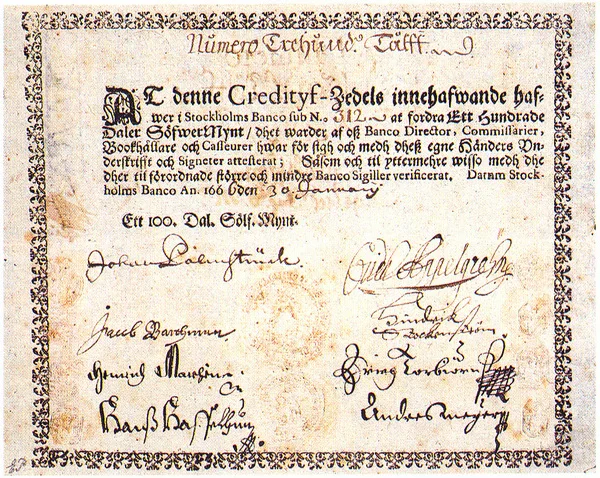
In 1661, Sweden’s Stockholms Banco began issuing some of Europe’s earliest banknotes. Compared with the heavy copper currency of the time, paper notes were considerably easier to carry. Yet convenience turned into crisis when the volume issued exceeded the bank’s capacity to redeem them reliably. Holders demanded their metal money back, but the bank could not meet those demands and ultimately fell into distress.
Source: Stockholms Banco, 100 daler silvermynt credit note, 30 January 1666. Reproduced in Wolfram Weimer, Geschichte des Geldes, 1997, via Wikimedia Commons.
Rights: Public Domain.
-
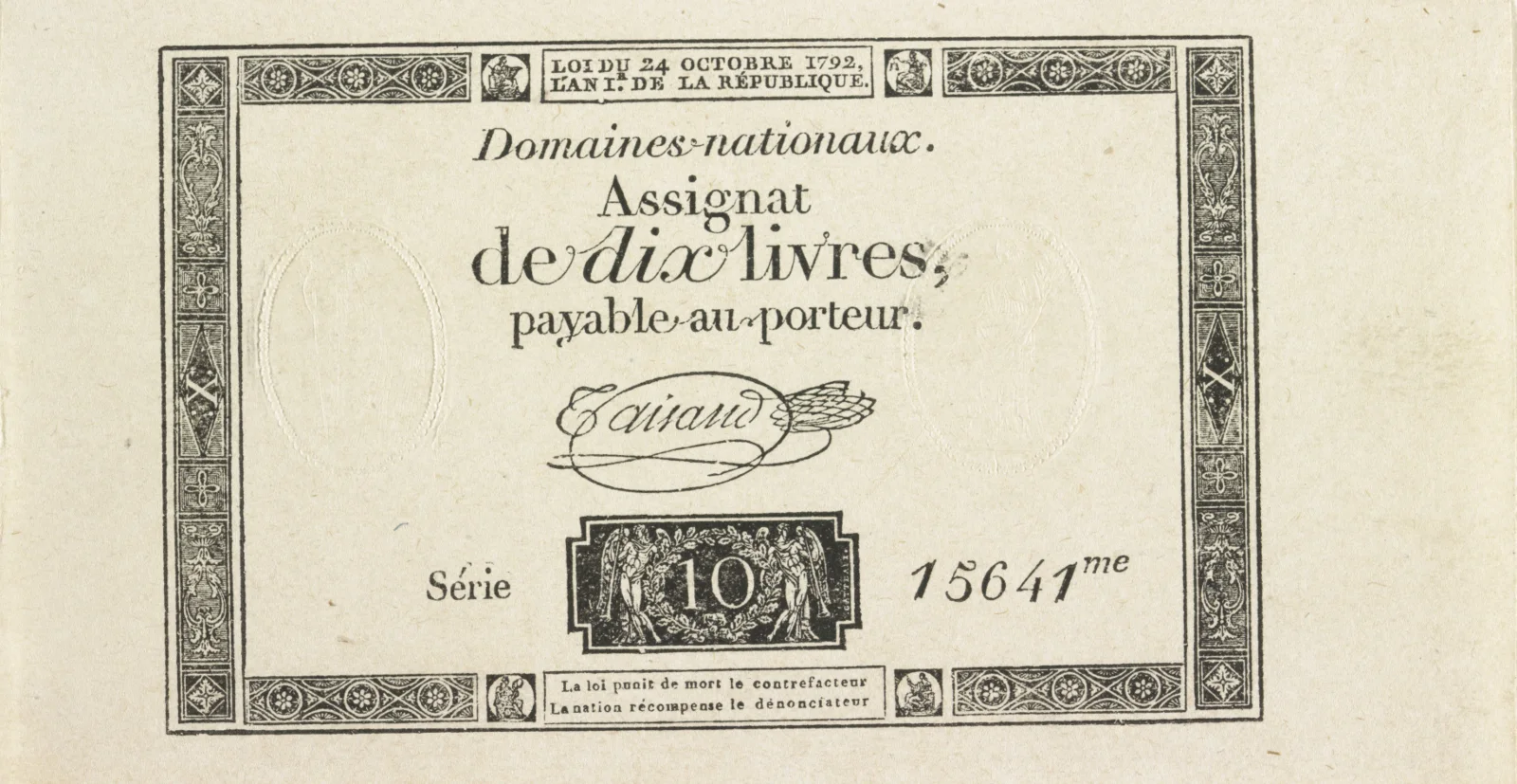
This episode reveals a recurring tension in the history of paper money: paper can be multiplied quickly, but the trust that supports it cannot simply be printed into existence.
Source: Rijksmuseum, Amsterdam, collection no. RP-P-OB-86.594-20. French assignat of 10 livres, 1792.
Rights: CC0 1.0 Universal.
-
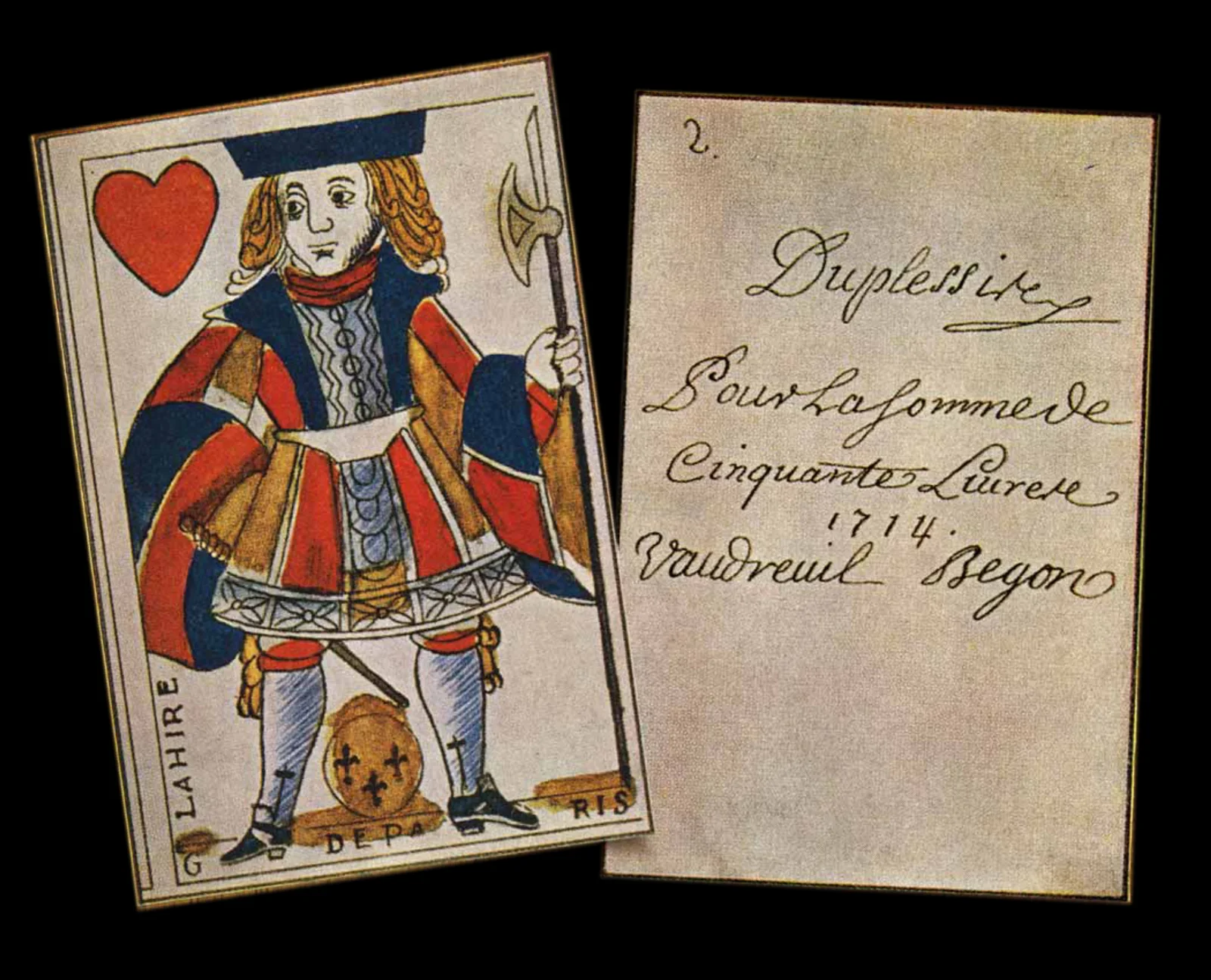
In North America, paper currency even took the form of playing cards. In 1685, a shortage of coins in New France led to the use of cut, inscribed, and signed cards to pay troops as an emergency measure while official funds were awaited. Their original role in games was temporarily replaced by a new promise of payment.
Source: National Currency Collection, Bank of Canada Museum. Playing-card money, New France, 1714, obverse and reverse. Via Wikimedia Commons.
Rights: Listed as CC BY-SA 4.0 on Wikimedia Commons; permission from the originating museum has not been independently verified.
-
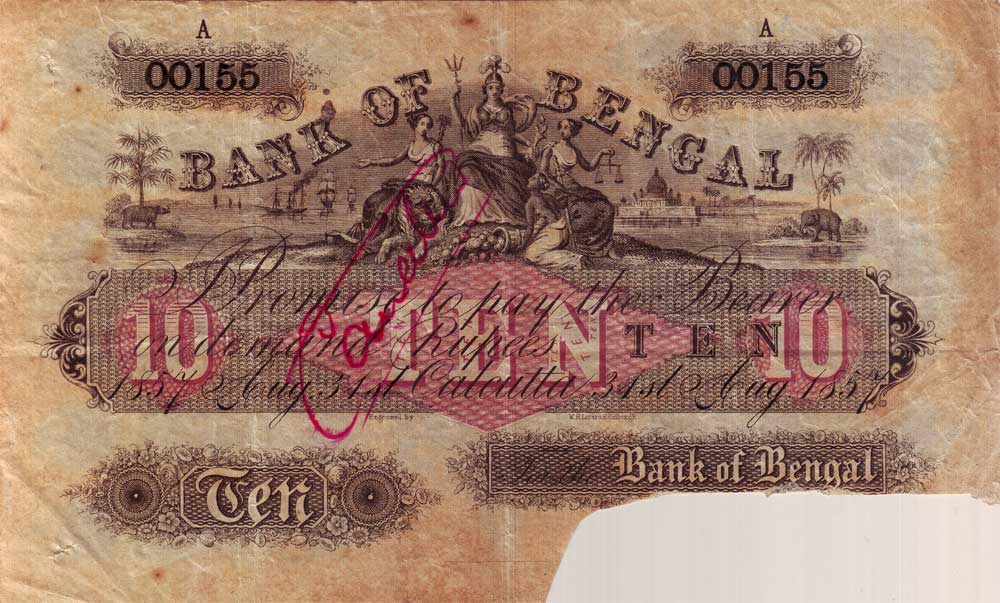
During the eighteenth and nineteenth centuries, banknotes developed in more parts of the world. India’s early banknotes were linked to banking activity in the late eighteenth century; handwritten and stamped paper money appeared in South Africa’s Cape region in 1782; and private banks in Australia began issuing notes in the early nineteenth century. Systems, issuers, and levels of acceptance differed from place to place, and paper money remained far from the standardized forms familiar today.
Source: Bank of Bengal, 10 rupees, 1857. Digital reproduction via Wikimedia Commons.
Rights: Public Domain.
-
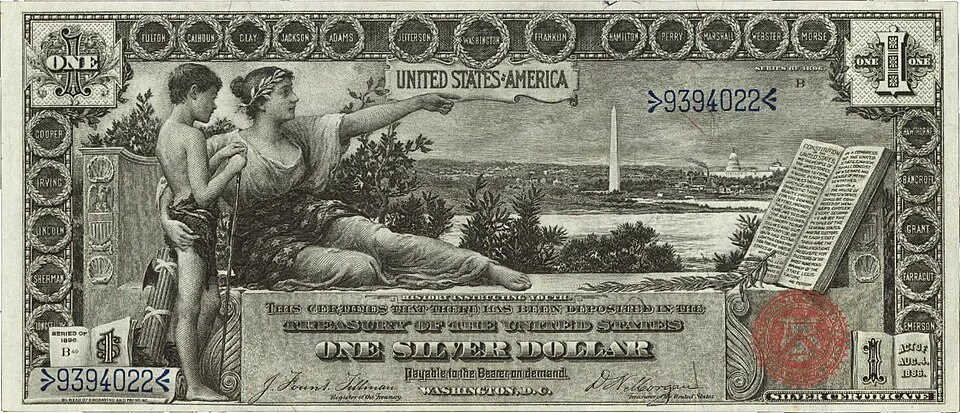
From local commerce to transoceanic trade, paper gradually entered a broader sphere of economic life. A new question followed: what should a piece of paper representing value look like for people to place their trust in it?
Source: United States, one-dollar silver certificate, Series of 1896. Digital image uploaded by Scewing, via Wikimedia Commons.
Rights: Public Domain in the United States; United States Government currency design.
-
04
A World of Beauty Within a Small Frame
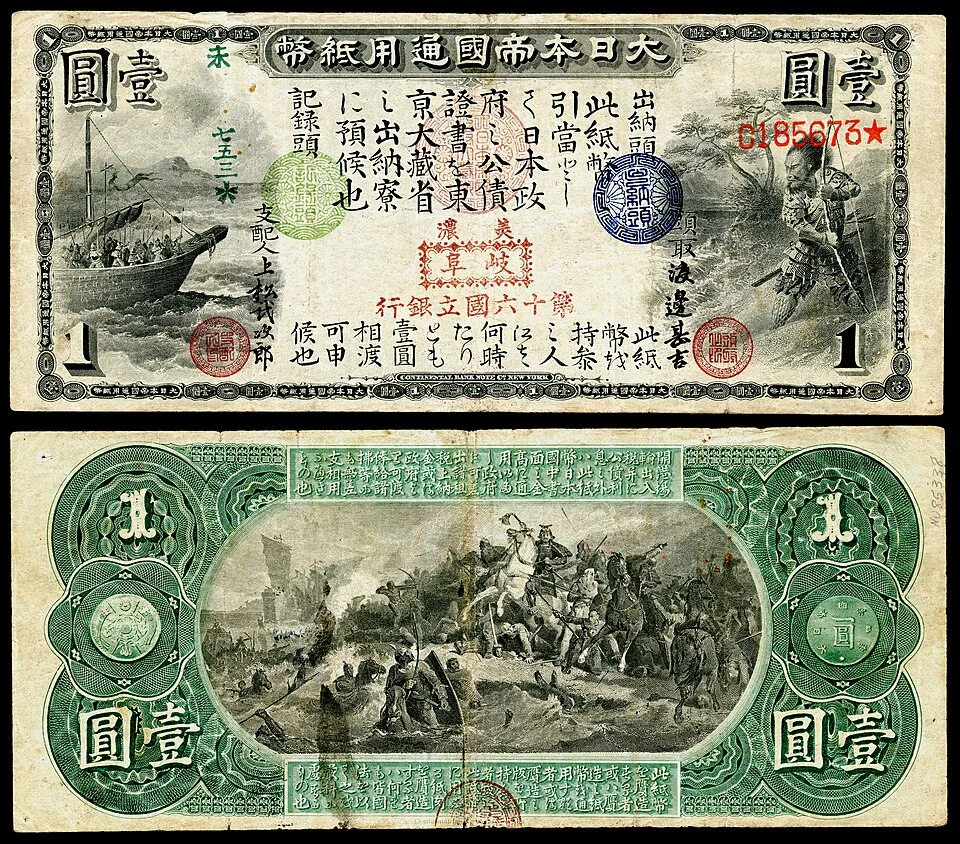
As commerce and printing techniques developed during the eighteenth and nineteenth centuries, the small surfaces of tickets, certificates, and banknotes blossomed into a rich diversity of visual forms.
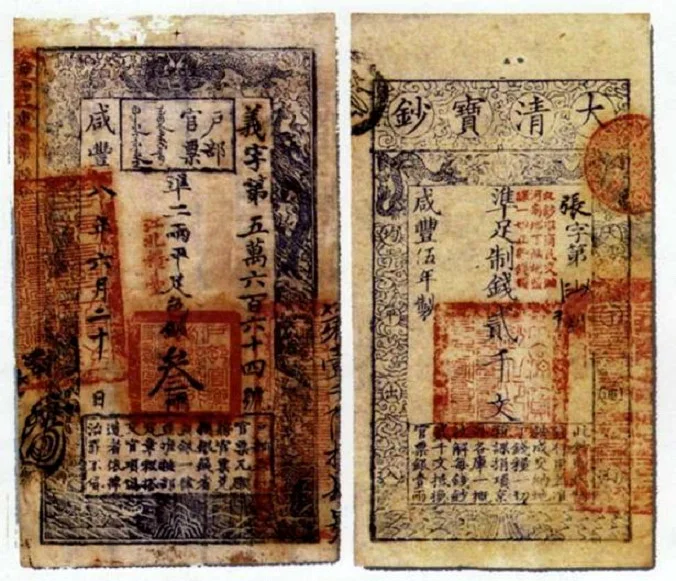
Designs took on distinct characteristics in different regions, shaped by local writing conventions, pictorial traditions, and systems of issuance. Calligraphy, seals, portraits, architecture, and classical allegorical figures appeared alongside denominations, signatures, and promises of redemption. Through these words and images, the issuer’s identity and commitments acquired a recognizable form.
Source: Qing dynasty banknotes, Xianfeng period: Hubu Guanpiao and Da Qing Baochao. Photograph by Buhuzu, via Wikimedia Commons.
Rights: Photograph released into the public domain by its creator.
_
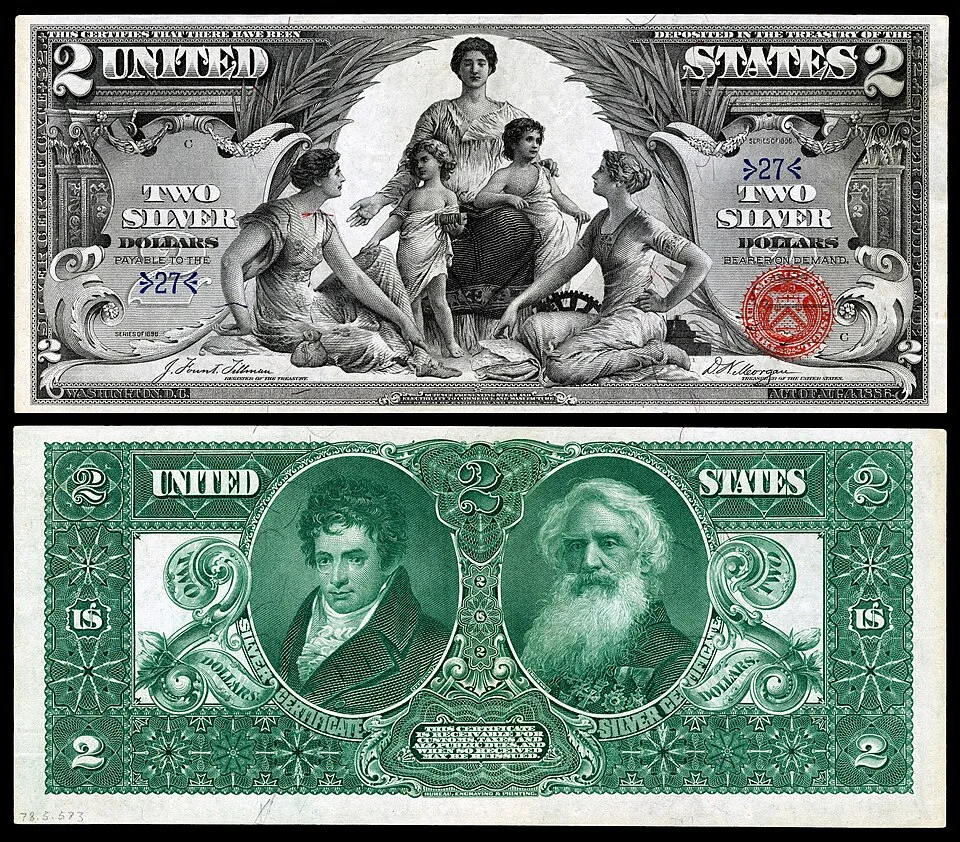
On engraved banknotes, line was especially important. Engravers rendered figures through fine dots and lines, shaping light and shadow by varying their depth, thickness, and spacing. Drapery gained weight, wings acquired depth, and stems and leaves extended along the borders. A small note could hold the spatial depth and detail of a much larger painting.
Source: National Numismatic Collection, National Museum of American History, Smithsonian Institution. United States, two-dollar silver certificate, Series of 1896. Obverse engraved by G. F. C. Smillie. Image by Godot13.
Rights: Digital reproduction licensed under CC BY-SA 4.0.
_
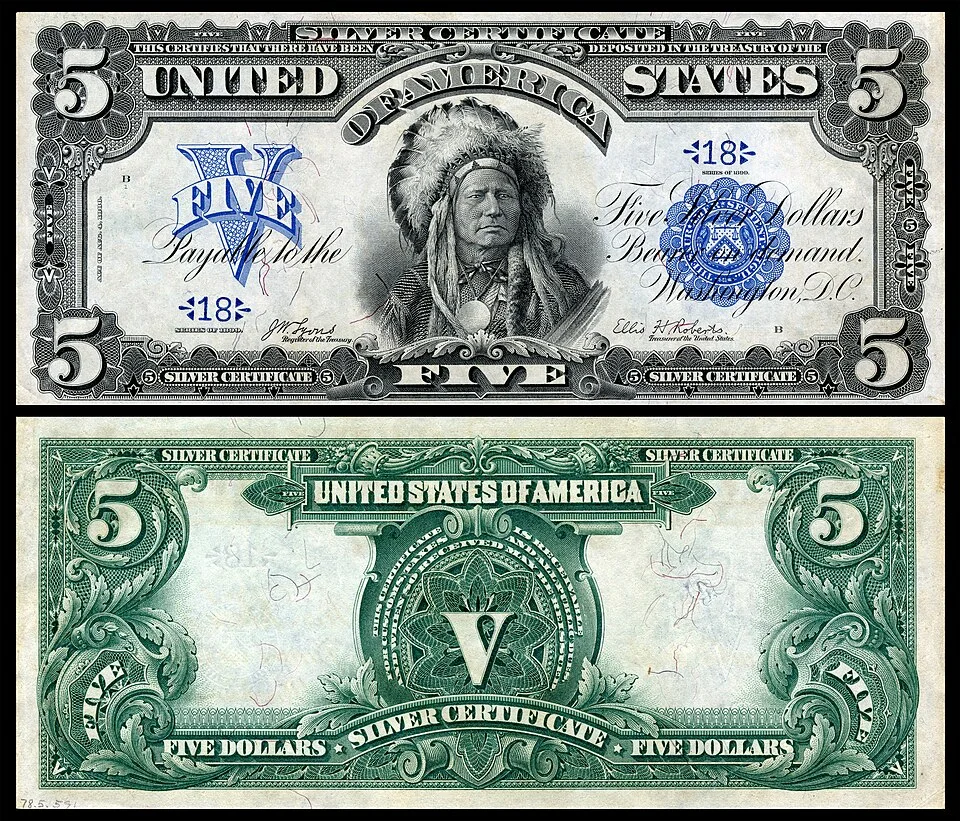
Alongside engraved figures and plants were complex geometric patterns produced with mechanical assistance. Interlacing, repeating, precisely drawn curves made imitation difficult, while patterns surrounding denominations made the numbers harder to alter. Ornament thus served a practical purpose: it had to be intricate enough to resist copying and distinctive enough to be recognized. The demands of security and the pursuit of art met in these details.
Source: National Numismatic Collection, National Museum of American History, Smithsonian Institution. United States, five-dollar silver certificate, Series of 1899, depicting Running Antelope. Image by Godot13.
Rights: Digital reproduction licensed under CC BY-SA 4.0.
_
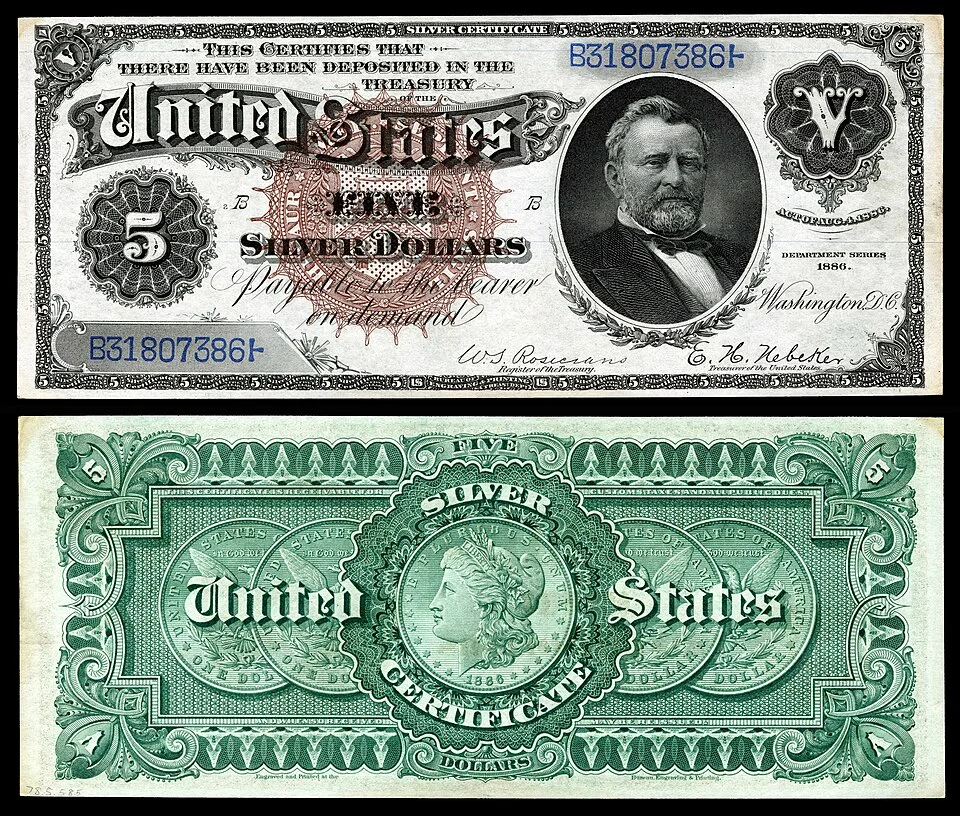
Numbers, signatures, and seals connected each note or certificate to its issuer and records of issuance. Together with paper, printing, and administrative systems, they provided a basis for identification, turning visual order into a structure of trust. The beauty of a banknote gradually took shape through the demands of viewing, recognition, and protection against forgery.
Within the images built from these fine lines lay something more: an era’s vision of itself.
Source: National Numismatic Collection, National Museum of American History, Smithsonian Institution. United States, five-dollar silver certificate, Series of 1886. Image by Godot13.
Rights: Digital reproduction licensed under CC BY-SA 4.0.
_
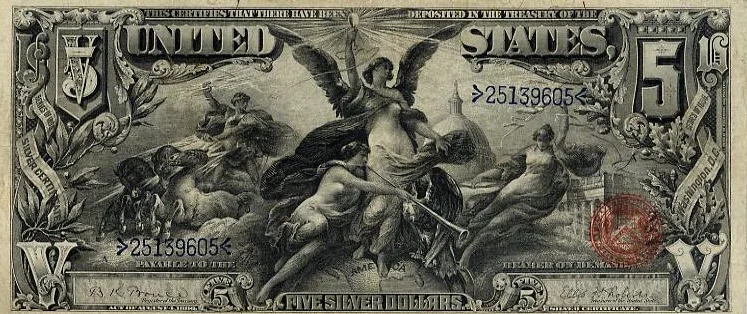
In 1896, the United States issued a group of silver certificates that became known as the “Educational Series.” The five-dollar certificate transformed electricity into a classical allegorical spectacle: at its center, a winged female figure holds an electric light aloft. Surrounding figures, flowing drapery, and clouds create a composition in motion, while lightning and allegorical imagery present the emerging technology as a force capable of changing the world. Designed by the artist Walter Shirlaw, the front of the note was translated through engraving into an image that could be printed and circulated.
Source: United States Bureau of Engraving and Printing. Five-dollar silver certificate, Series of 1896, obverse: Electricity as the Dominant Force in the World. Original image from US Rare Currency, via Wikimedia Commons.
Rights: Public Domain in the United States.
_
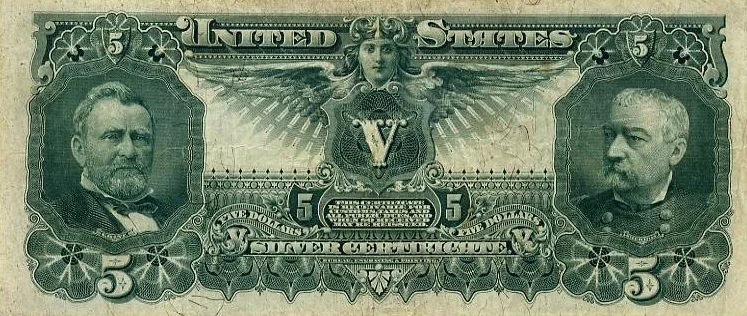
The choice of portraits, architecture, and allegorical figures likewise revealed how issuers wished to portray themselves: what deserved admiration, what represented prosperity, and what could embody the power of a nation or institution. A banknote’s composition and ornament thus carried a narrative beyond its face value, weaving authority, belief, and ideals into everyday exchange.
Source: United States Bureau of Engraving and Printing. Five-dollar silver certificate, Series of 1896, reverse, depicting Ulysses S. Grant and Philip Sheridan. Original image from US Rare Currency, via Wikimedia Commons.
Rights: Public Domain in the United States.
_
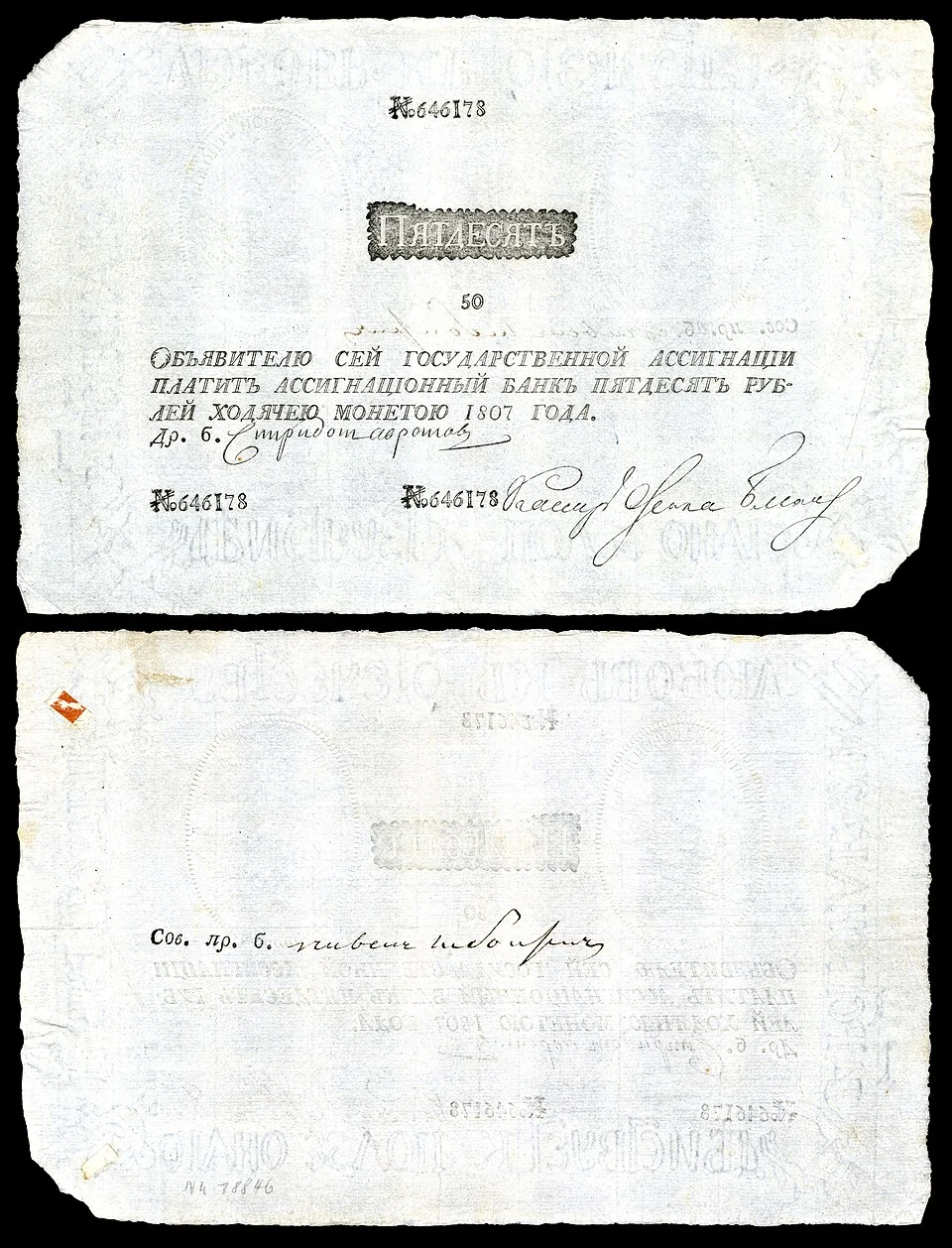
As these images entered circulation, the paper was folded, unfolded, kept, and passed into another person’s hands. Time used wear as its engraving tool, inscribing the traces of circulation into the surface alongside the original image. The engraver’s lines, the issuer’s intent, and an era’s visions of prosperity and progress all left, within this small space, a history that could continue to be read.
_
05
BEYOND THE GATES: Taking the Work Across Mediums
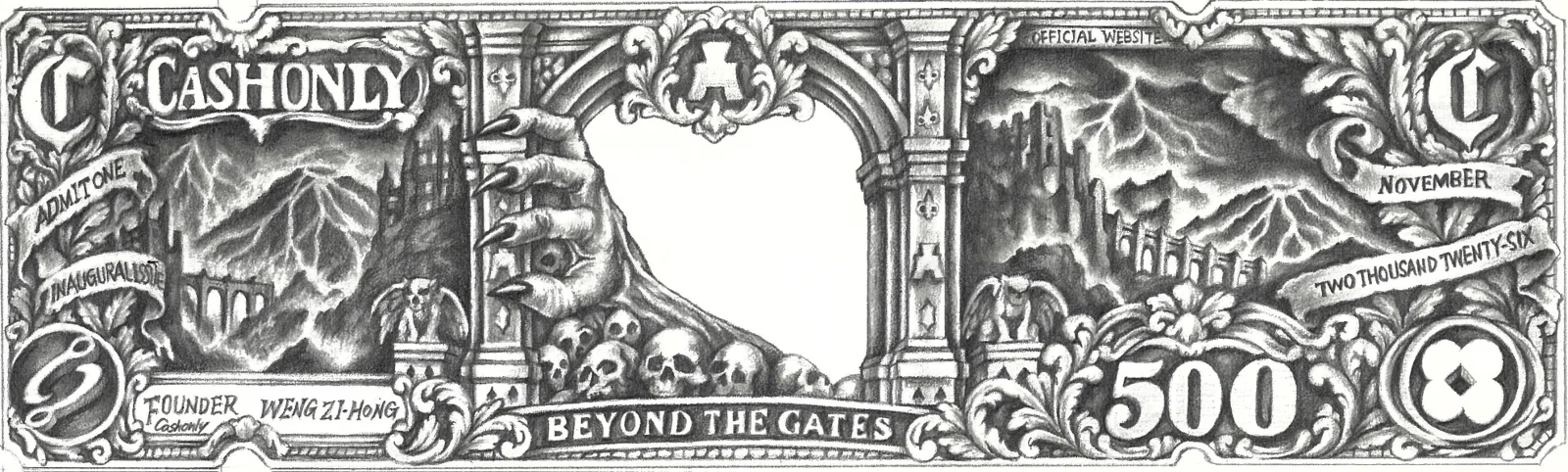
The work began with a specific idea: to draw a commemorative website ticket by hand for members to use and collect, giving the launch a tangible keepsake.
Within an elaborate classical border, a colossal hand reaches from the abyss amid ominous castles and surging lava. An archway forms the entrance to the image, while skulls, mountains, and lightning draw the eye deeper inside. Intricate ornament maintains the order of the composition, yet the scene beyond the gates holds uncertainty and unease, creating a commemorative image distinctly CASHONLY.
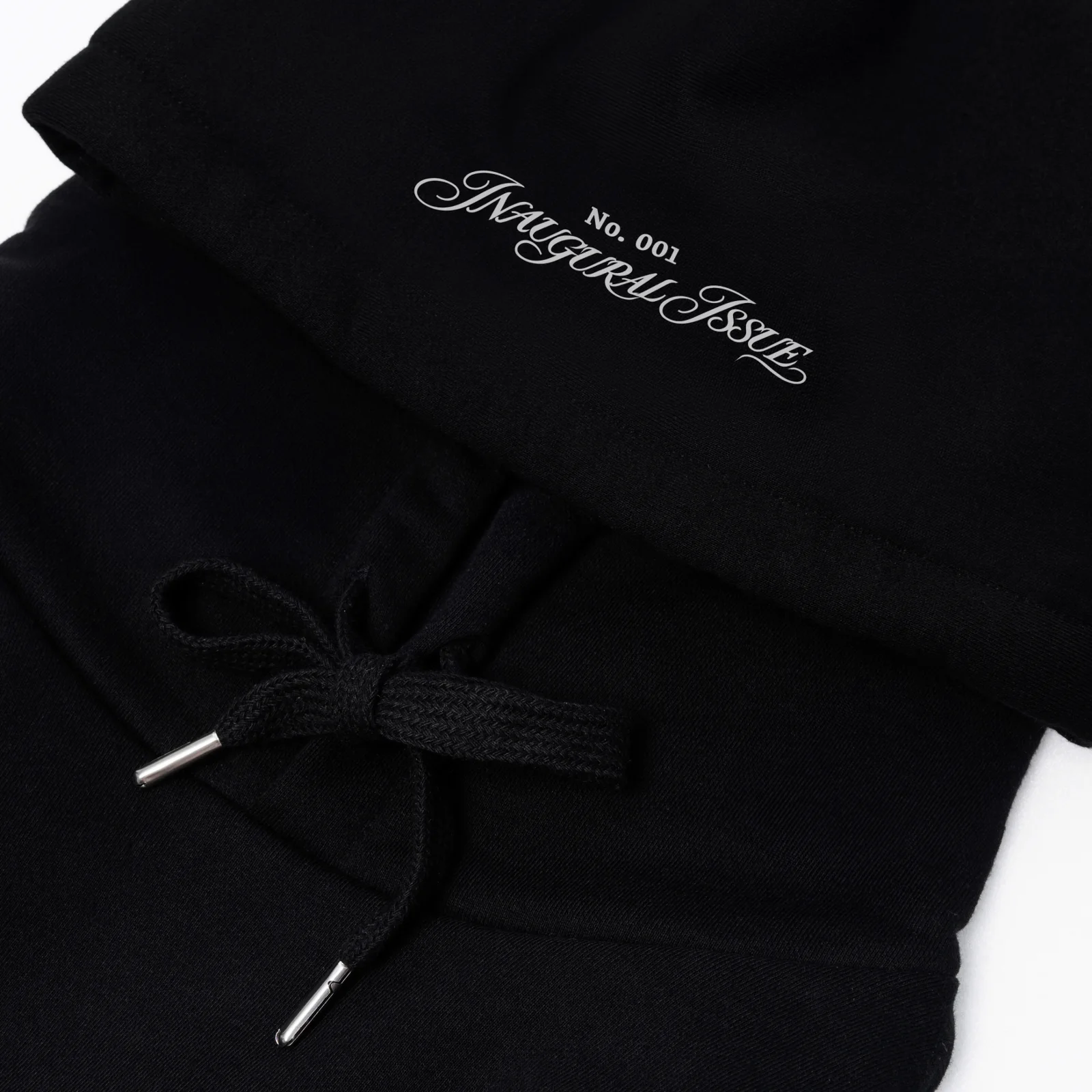
As the drawing reached completion, the work extended into clothing. Each garment carries a unique serial number, echoing the visual language of identification and security found on tickets and banknotes, and giving each piece an identity of its own. The same image is worn by different people, yet every garment has its own number, marking its place within this issue.
_
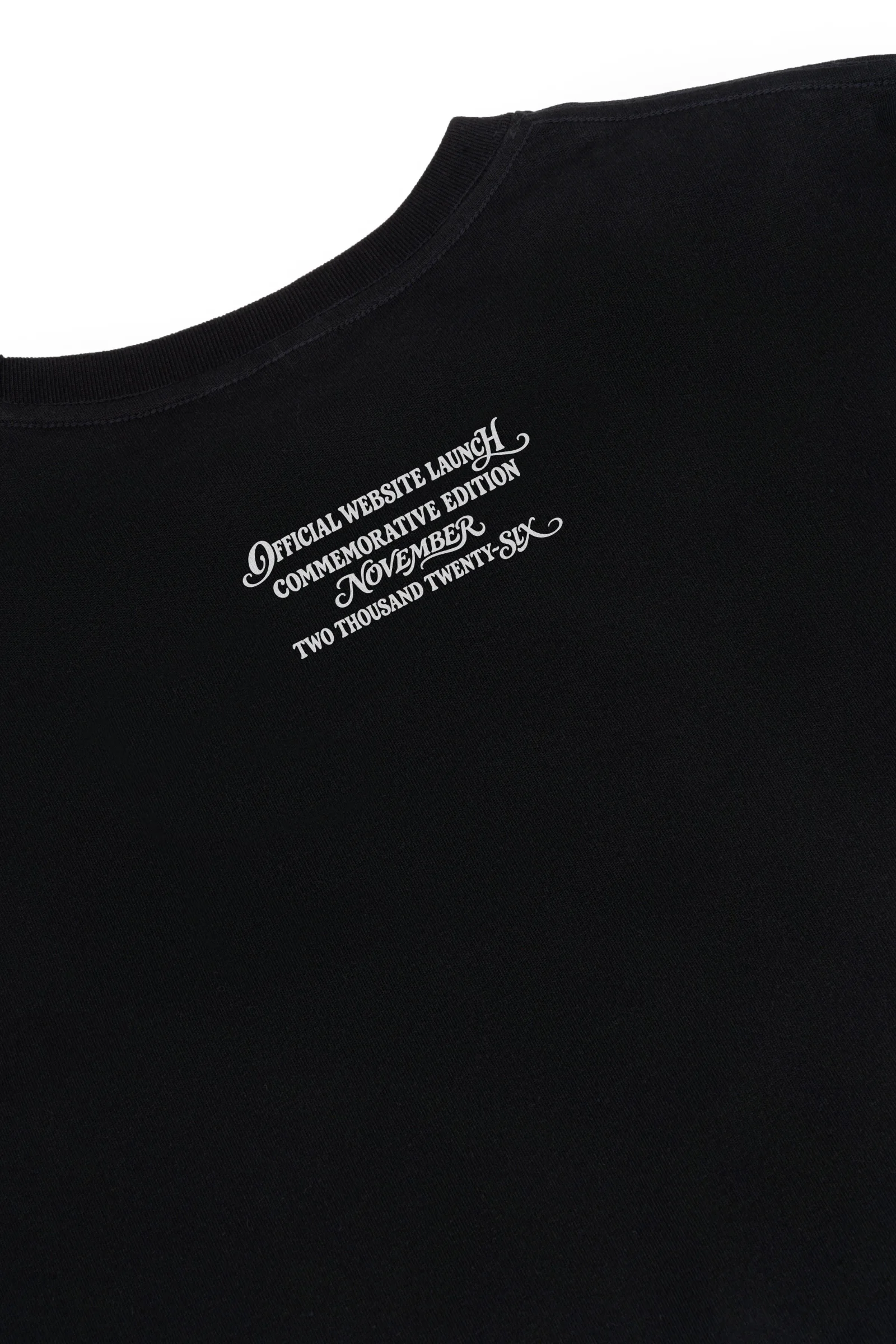
“INAUGURAL ISSUE” marks the first release, while the website launch inscription records the occasion and its date. Image, number, and text together form a keepsake, allowing the garment to carry the context in which the work was created.
_
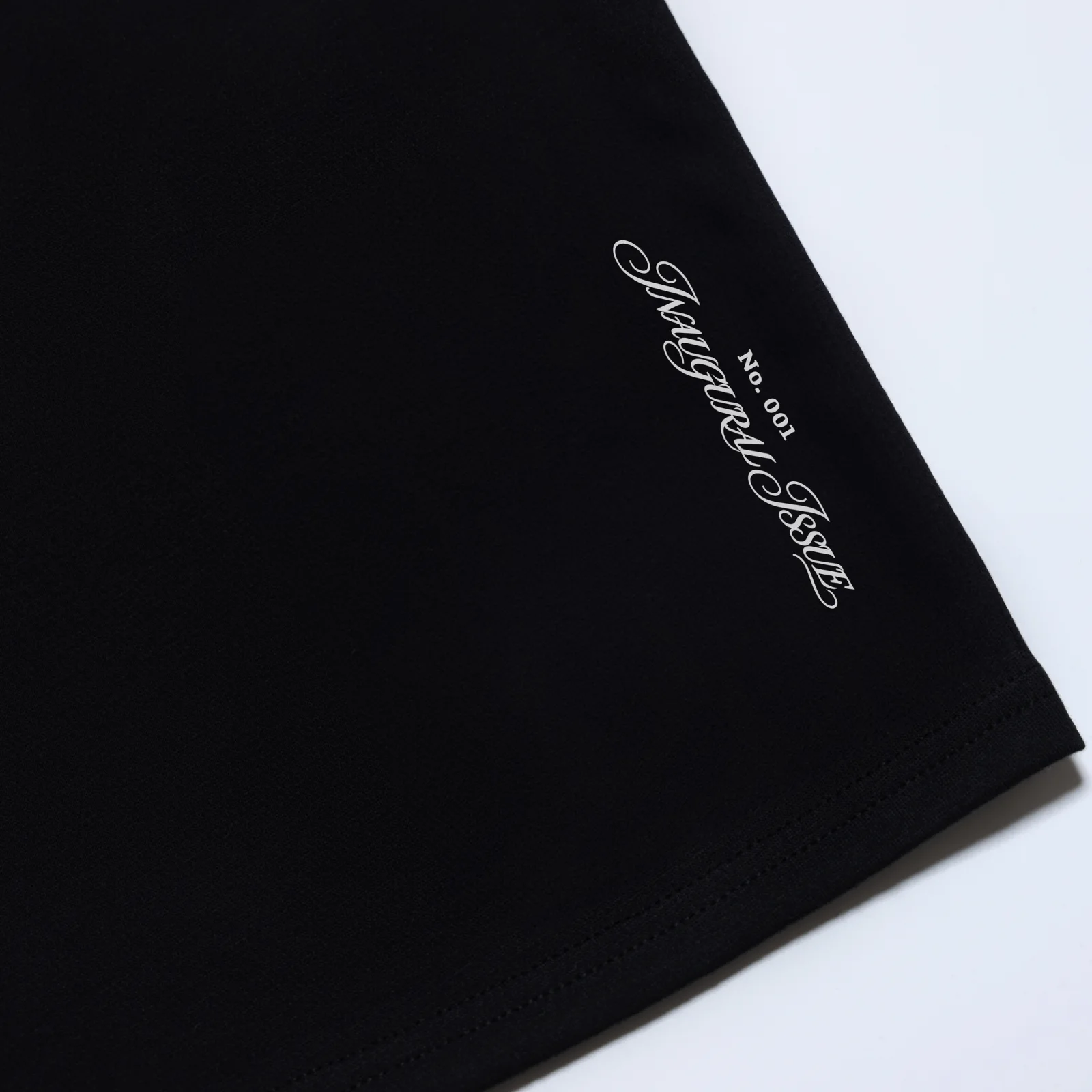
The launch of the global website thus becomes an opportunity for the brand to expand its forms of expression. Beginning with an original drawing, the work connects commemorative tickets, clothing, and digital space, continuing to unfold through use, collecting, wearing, and viewing.
_
 PreorderGARMENTS
 PreorderGARMENTS
BEYOND THE GATES
Beyond the gates lie places the work has yet to reach.
With this collection, CASHONLY marks a new entrance and declares its resolve to keep creating beyond established boundaries.

Become a subscriber and support what we are building.